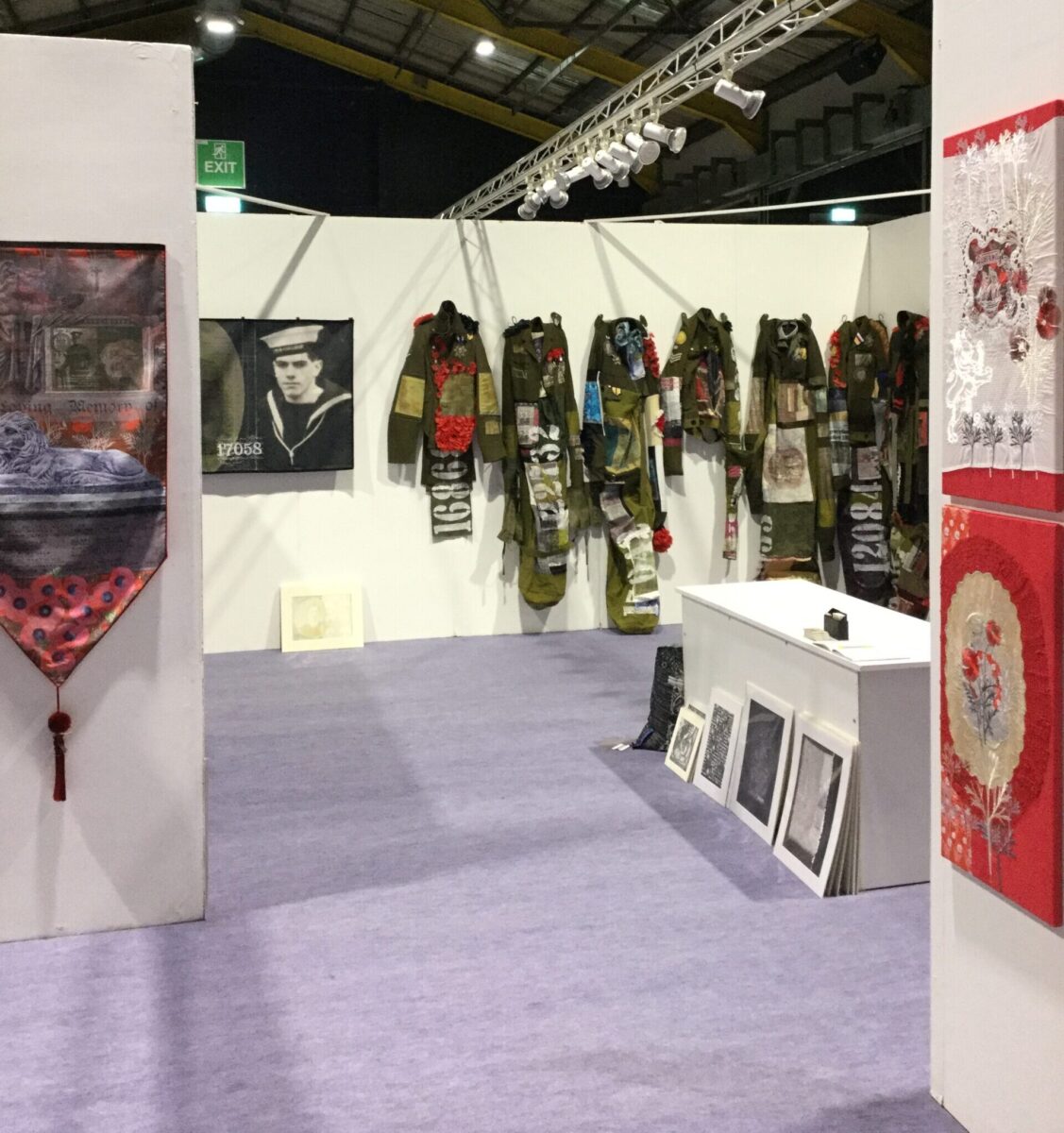
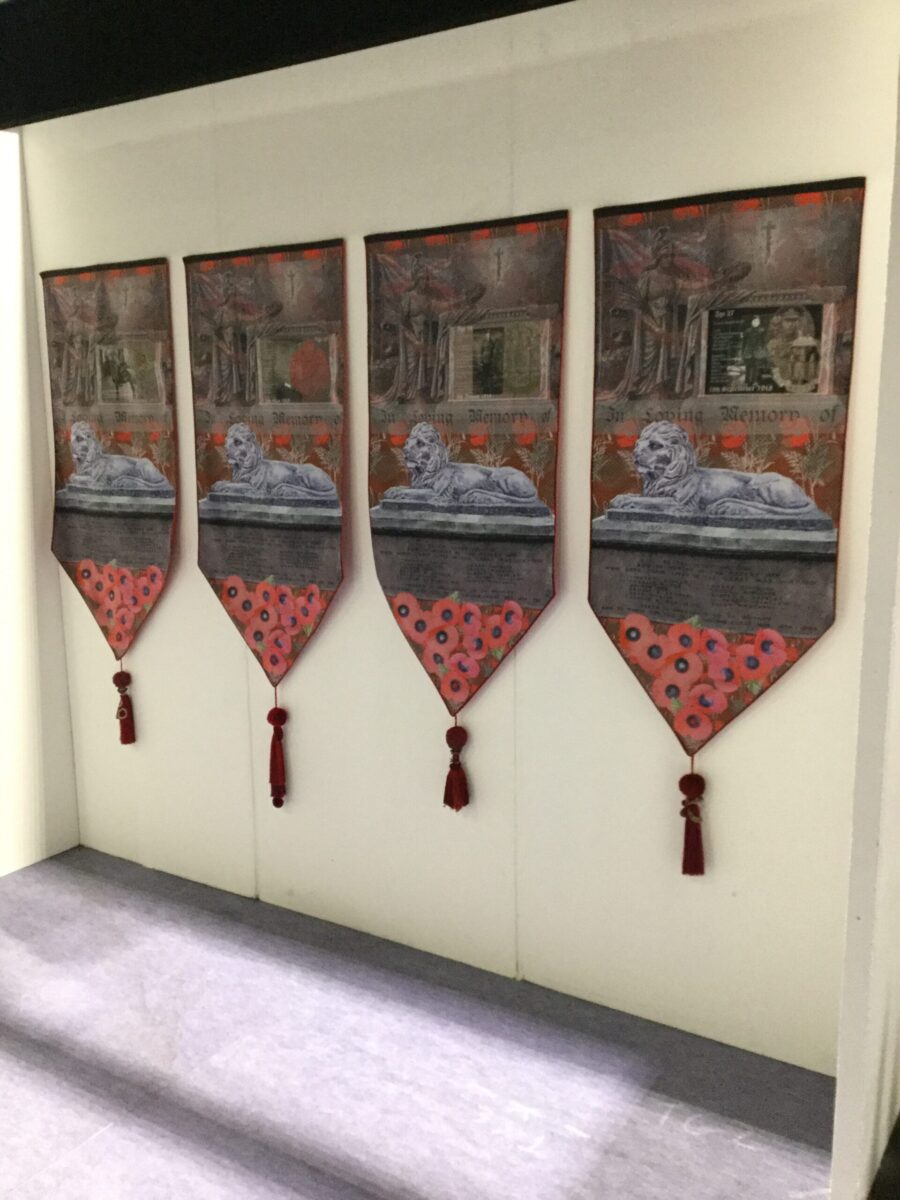
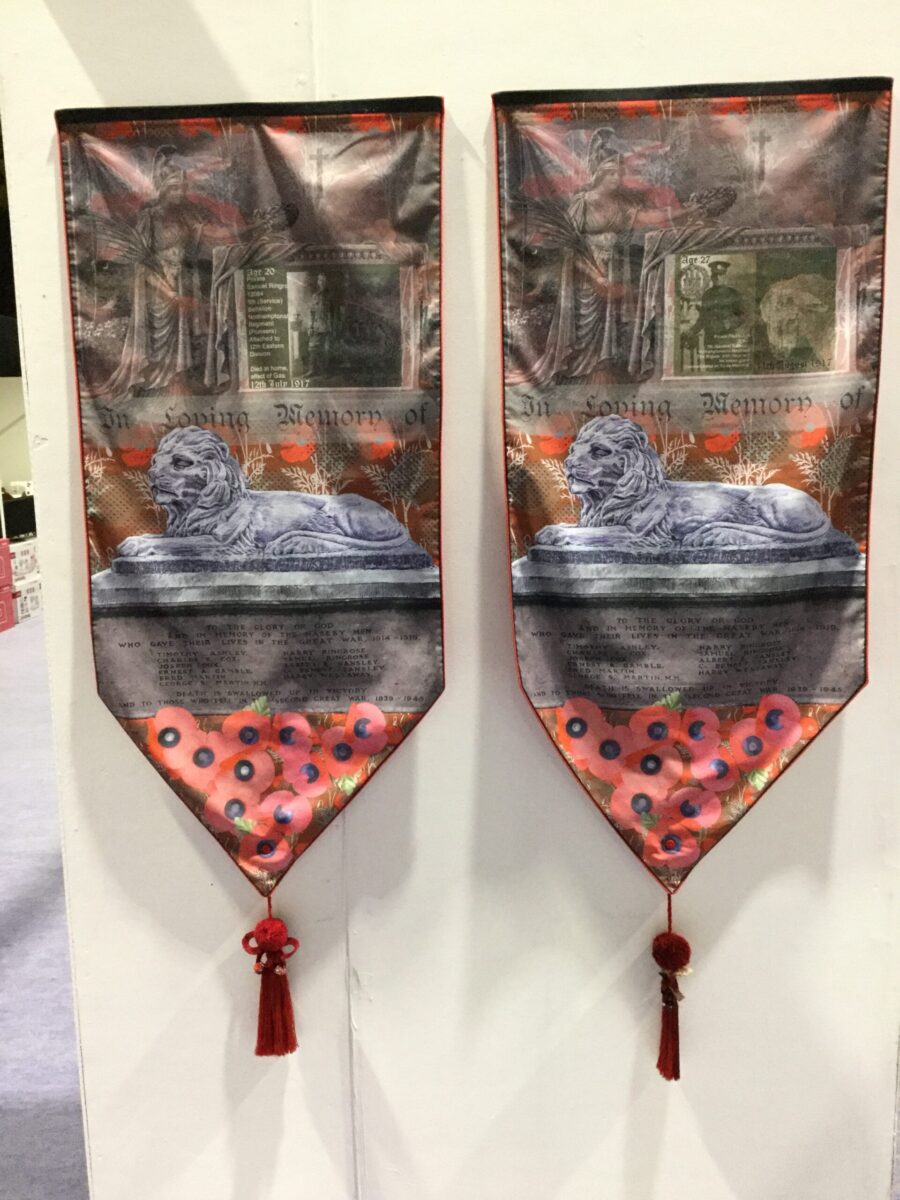
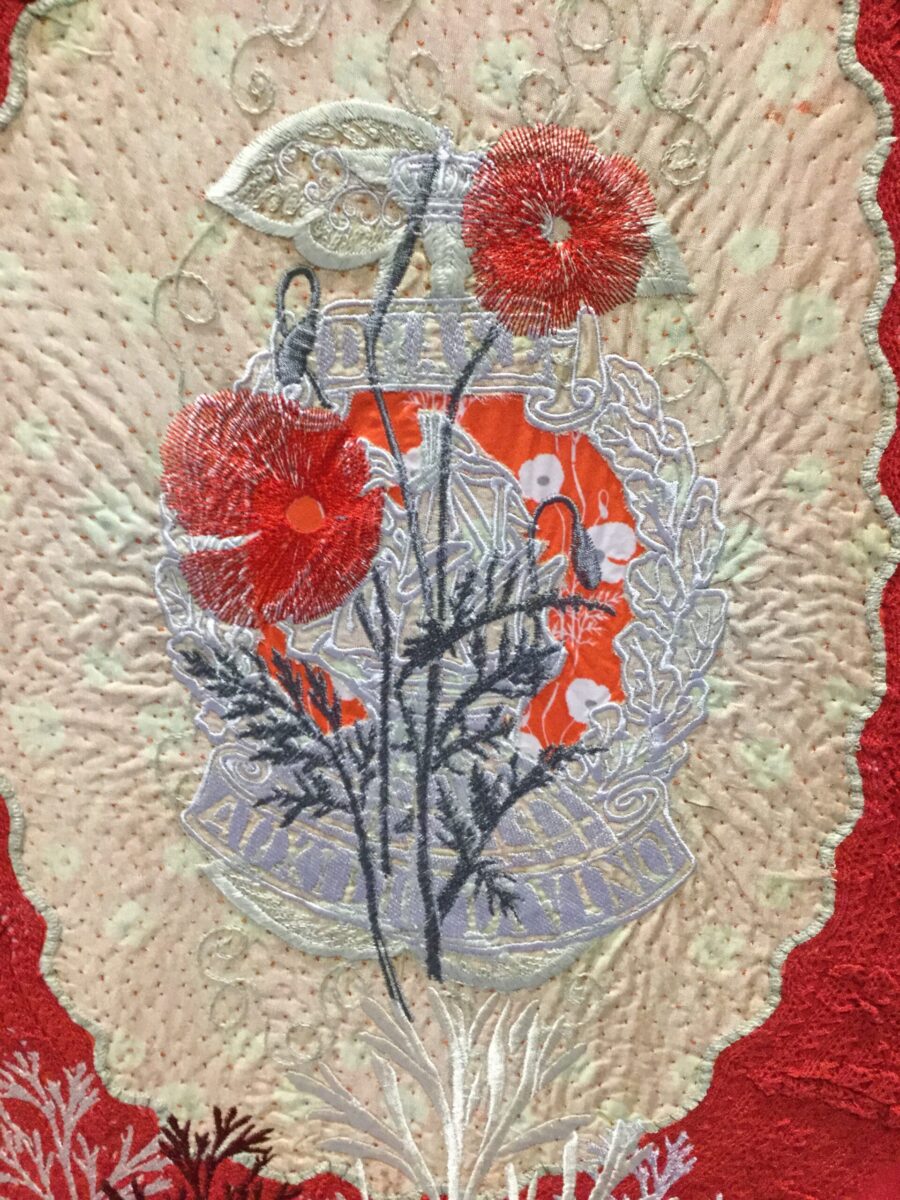
’Decorated – Tour of Duty’
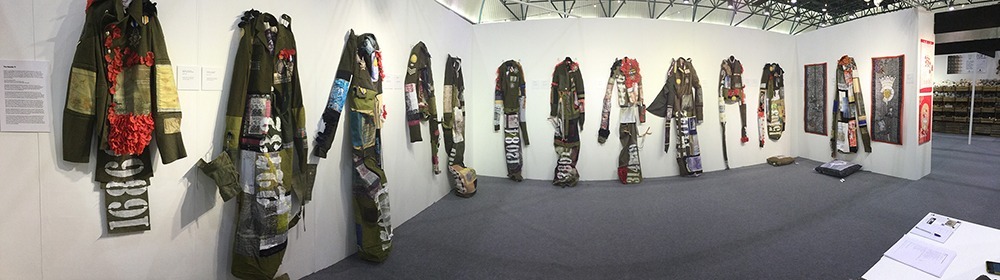
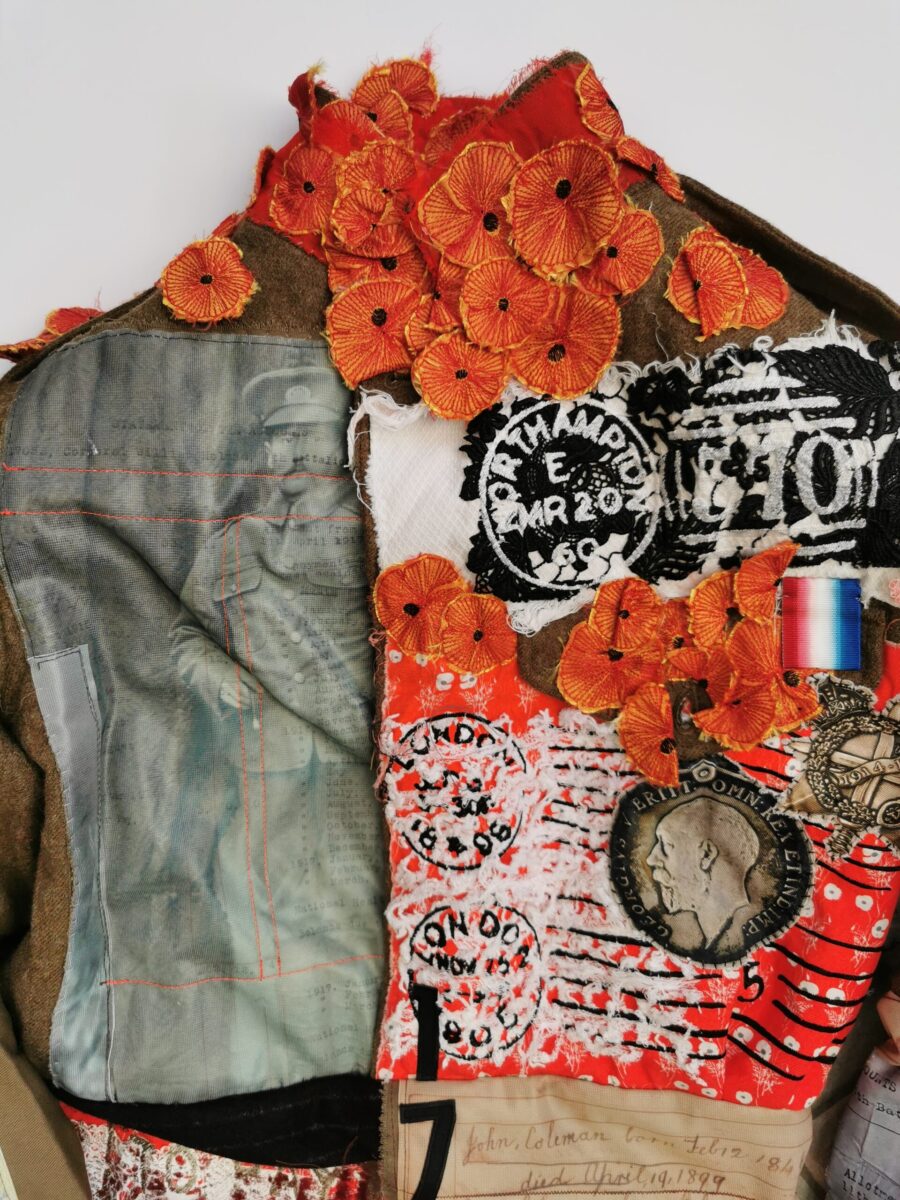
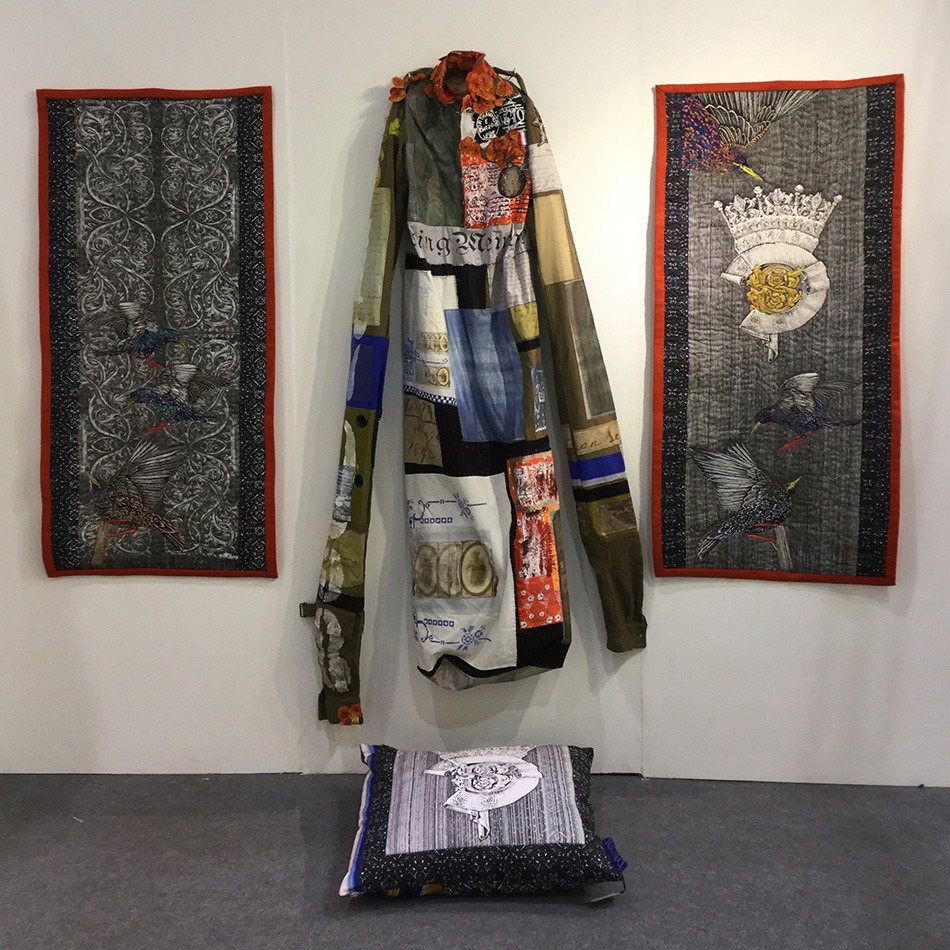
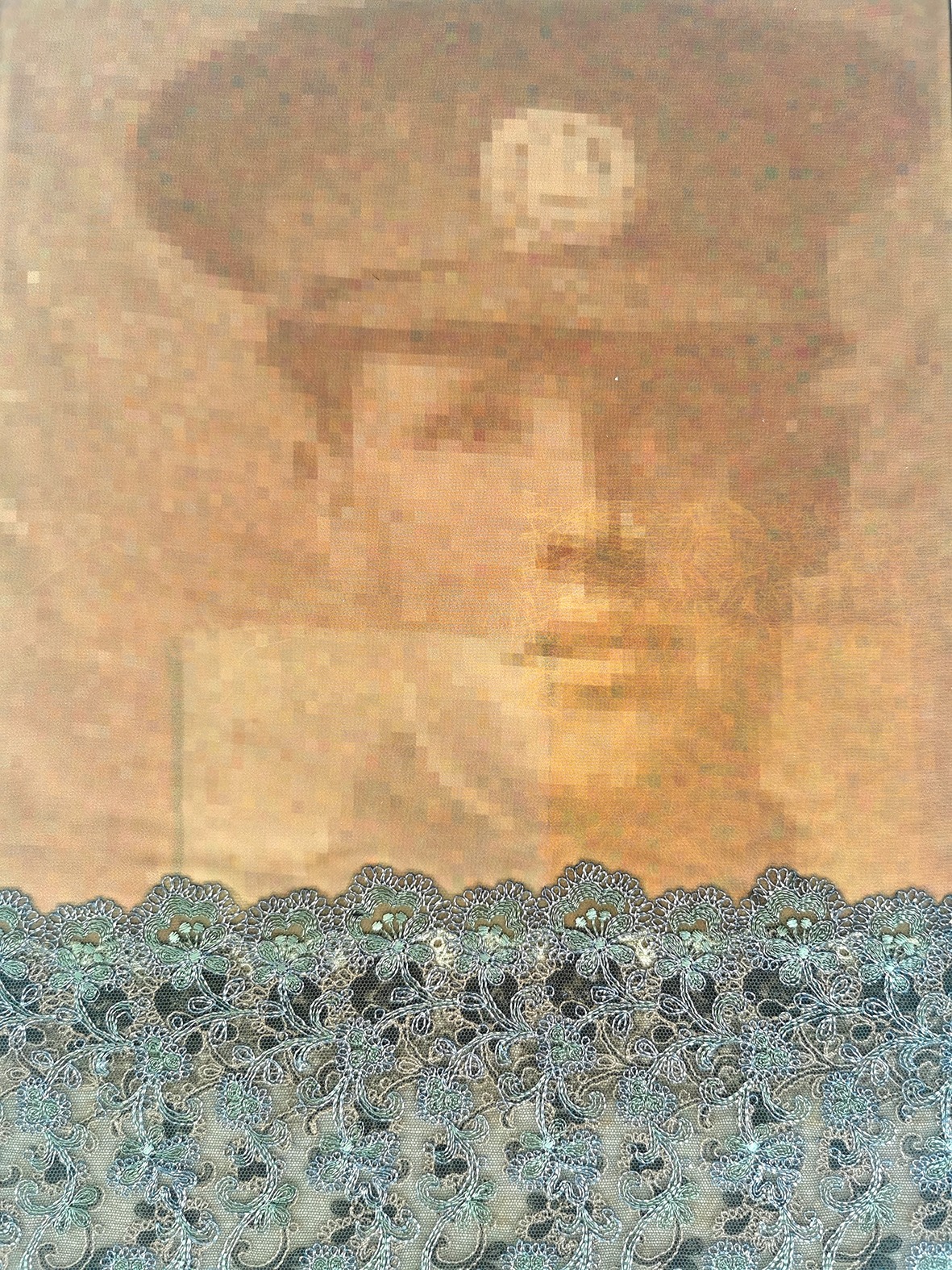
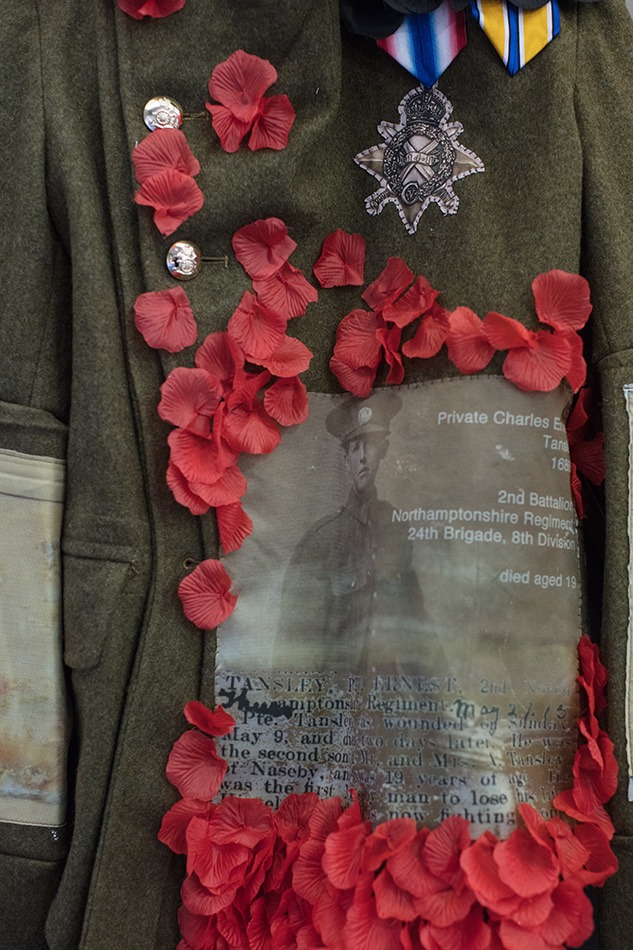
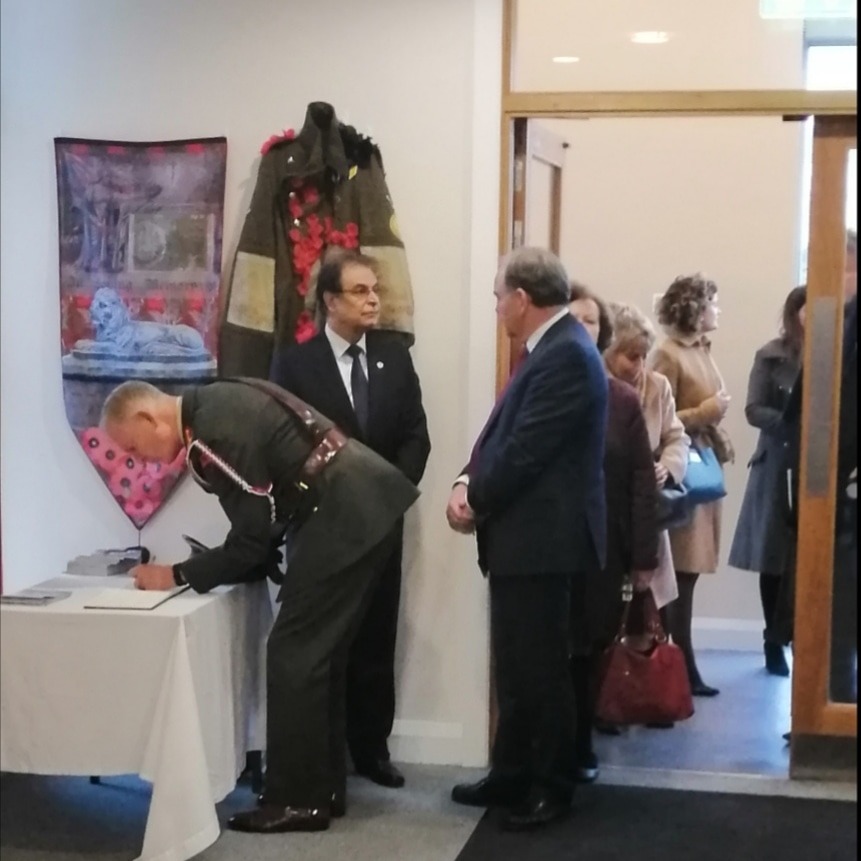
This exhibition encompasses over 4 years of research and practical textile experiments that reflect on the ideas of loss and commemoration. It explores just what we mean by the term ‘decorated’. 2017 saw the centenary of the death of my Great Grandfather, a person who for me was never anymore than an old photo of a soldier that used to be on my grandmother’s sideboard. Like many of those who served and died in WW1 he was ‘decorated’ with three WW1 medals. Before starting this project I had only a vague sense that these existed or what they signified. It has been a vast undertaking to try and be both respectful to the memory of those who died in the First World War and also to try and reflect what it must have been like for those who survived. The sight of the vast graveyards and memorials in France and Belgium are places that seem so far away from our everyday experience. They are in sharp contrast to the war memorials in every English town and village that seem to blossom and become visible only when they are decorated with wreaths of poppies on Remembrance Sunday.
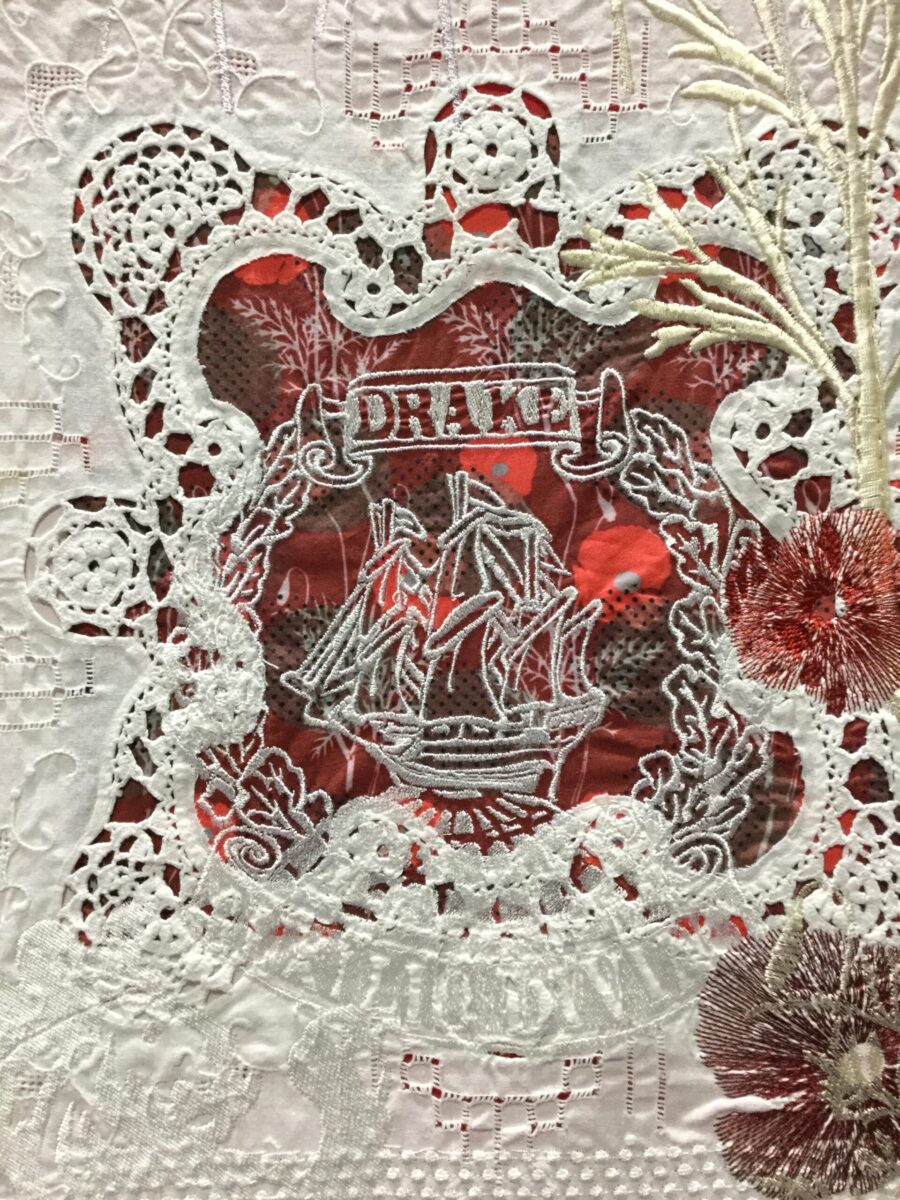
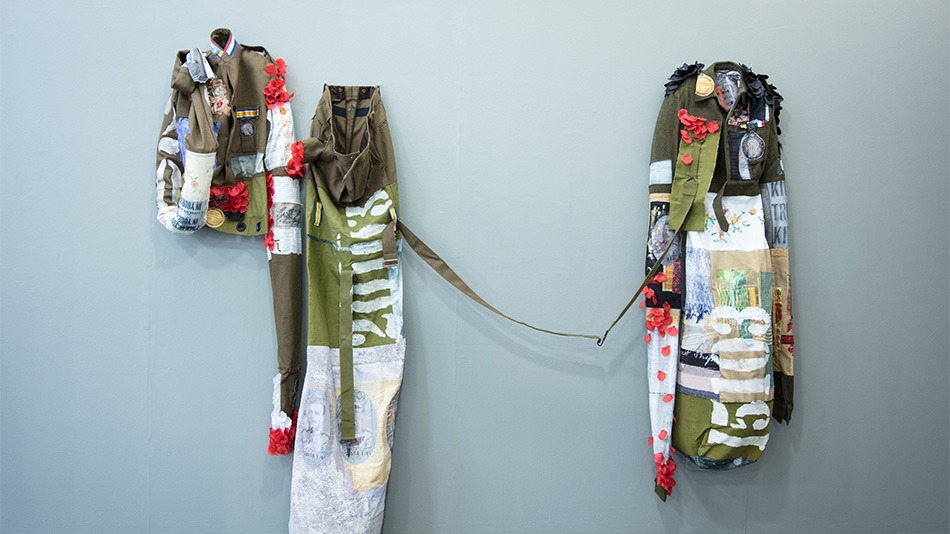
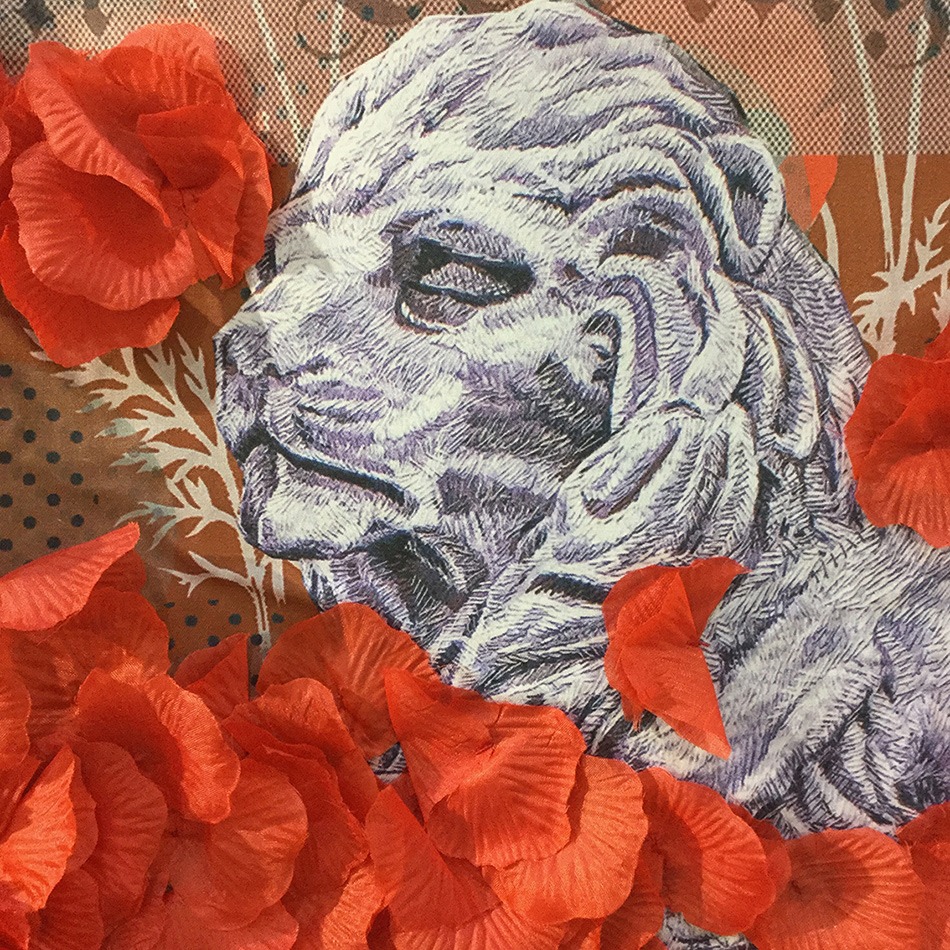
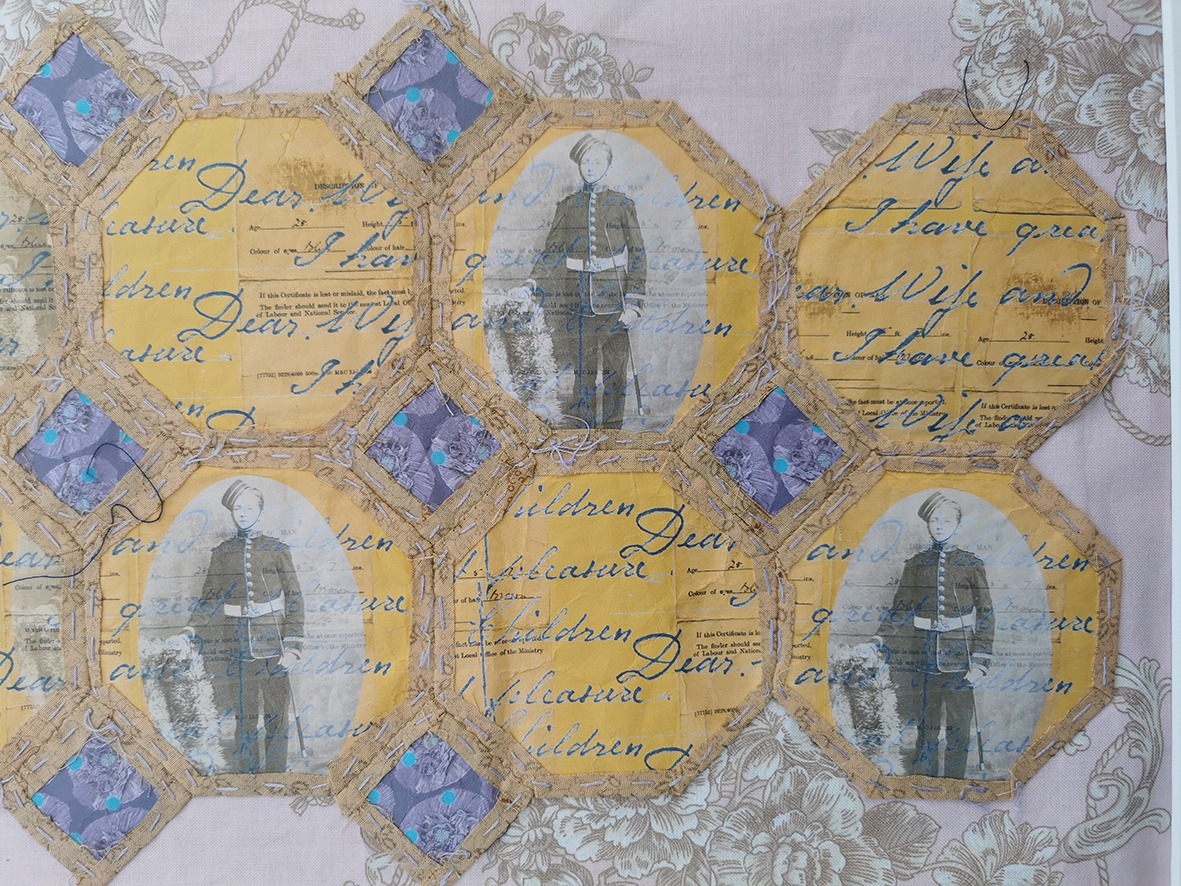
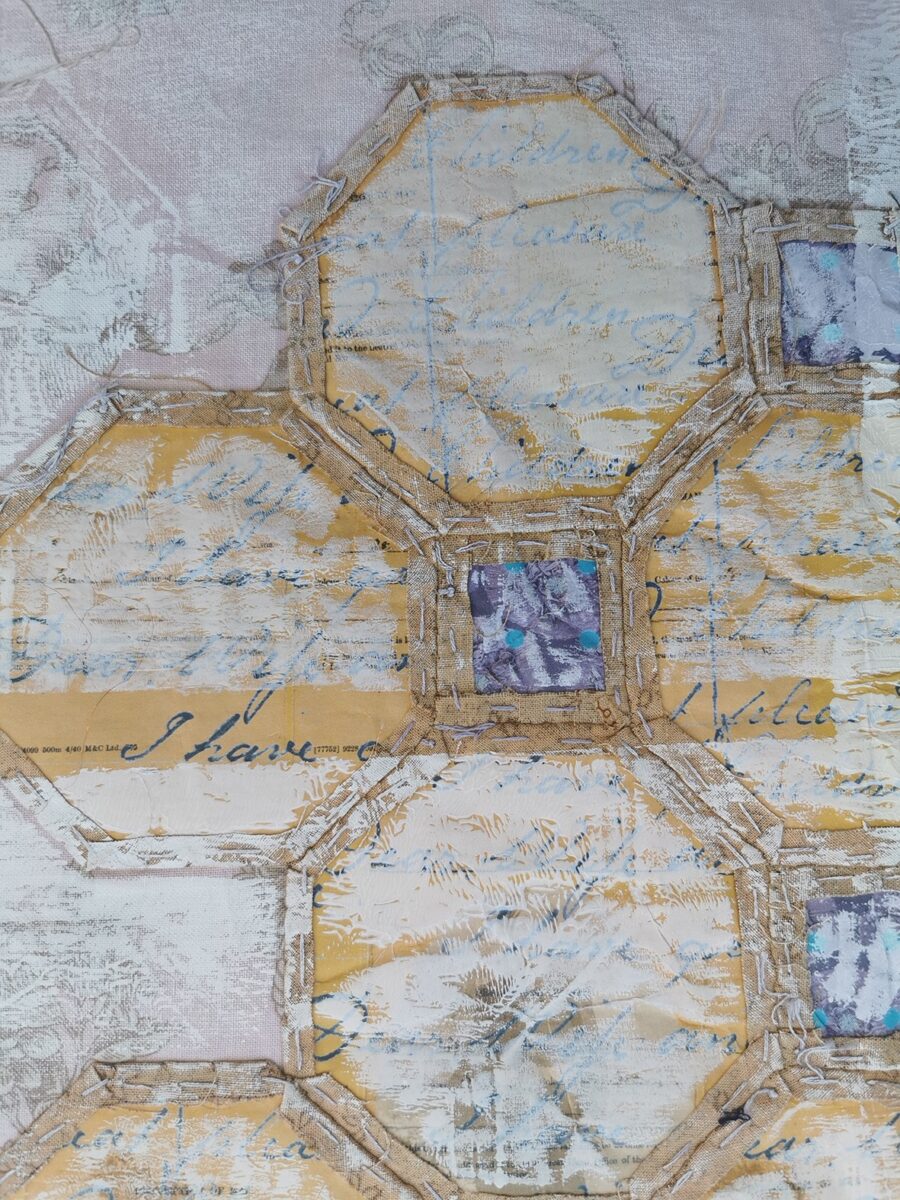
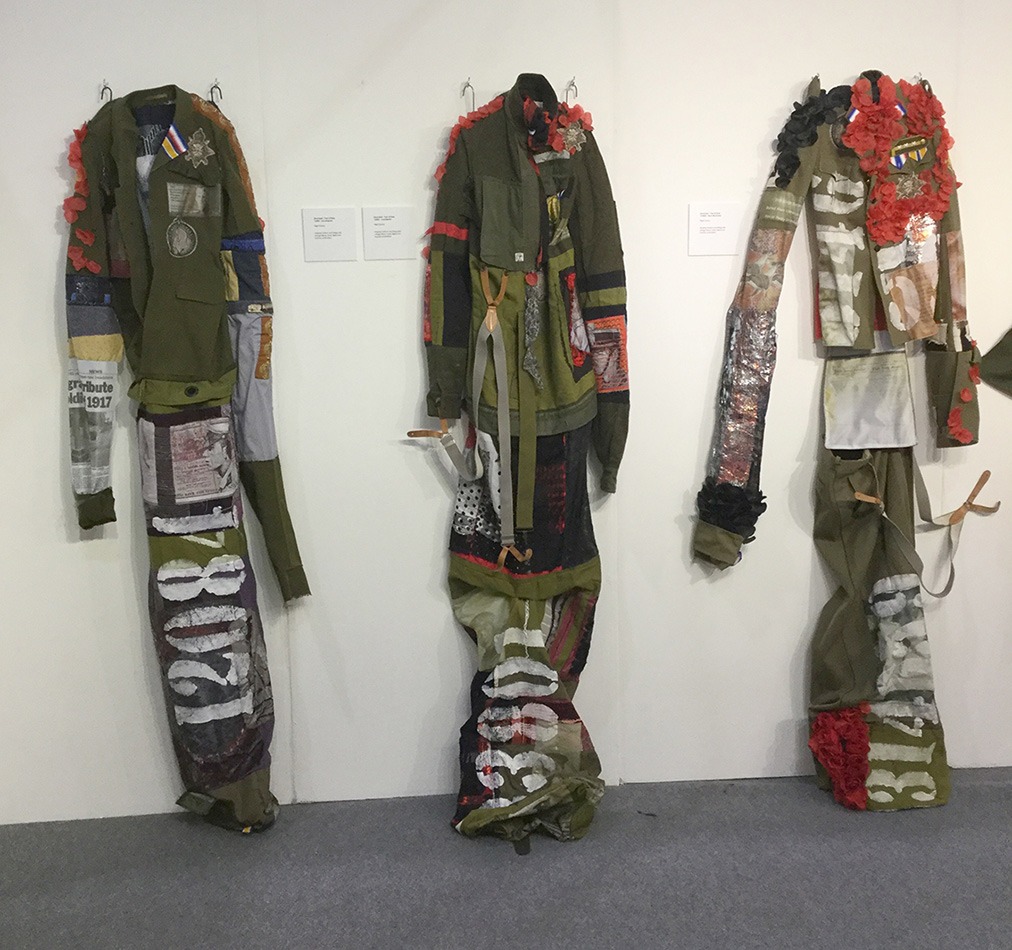
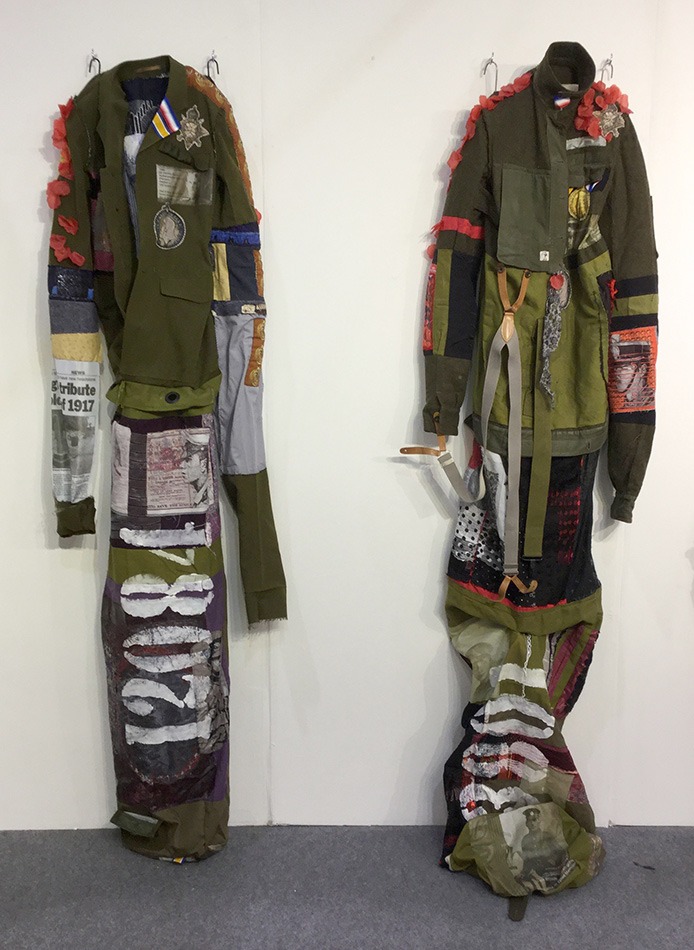
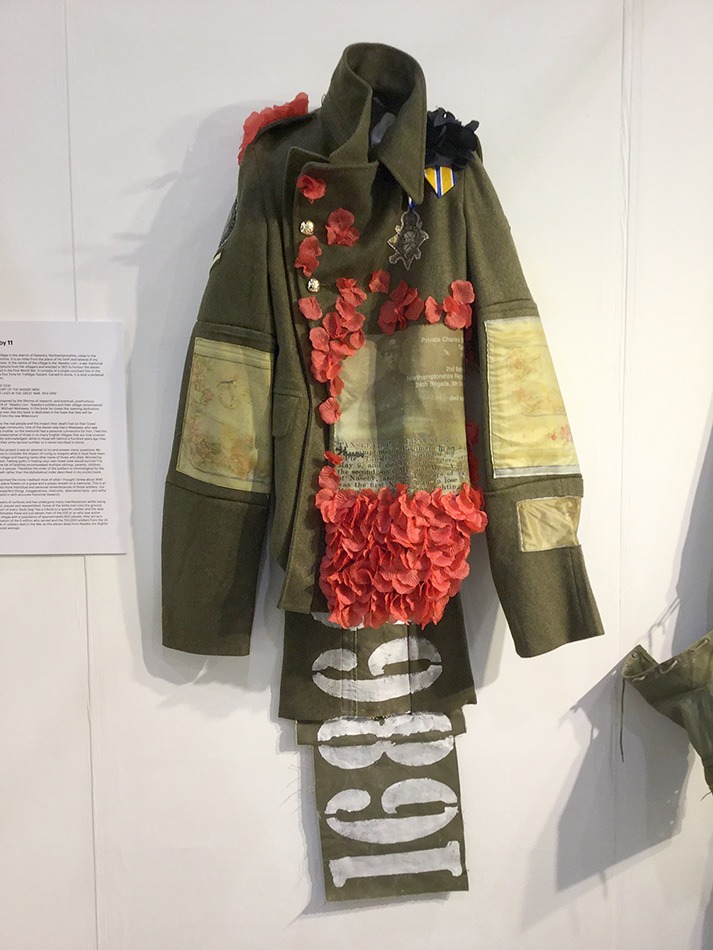
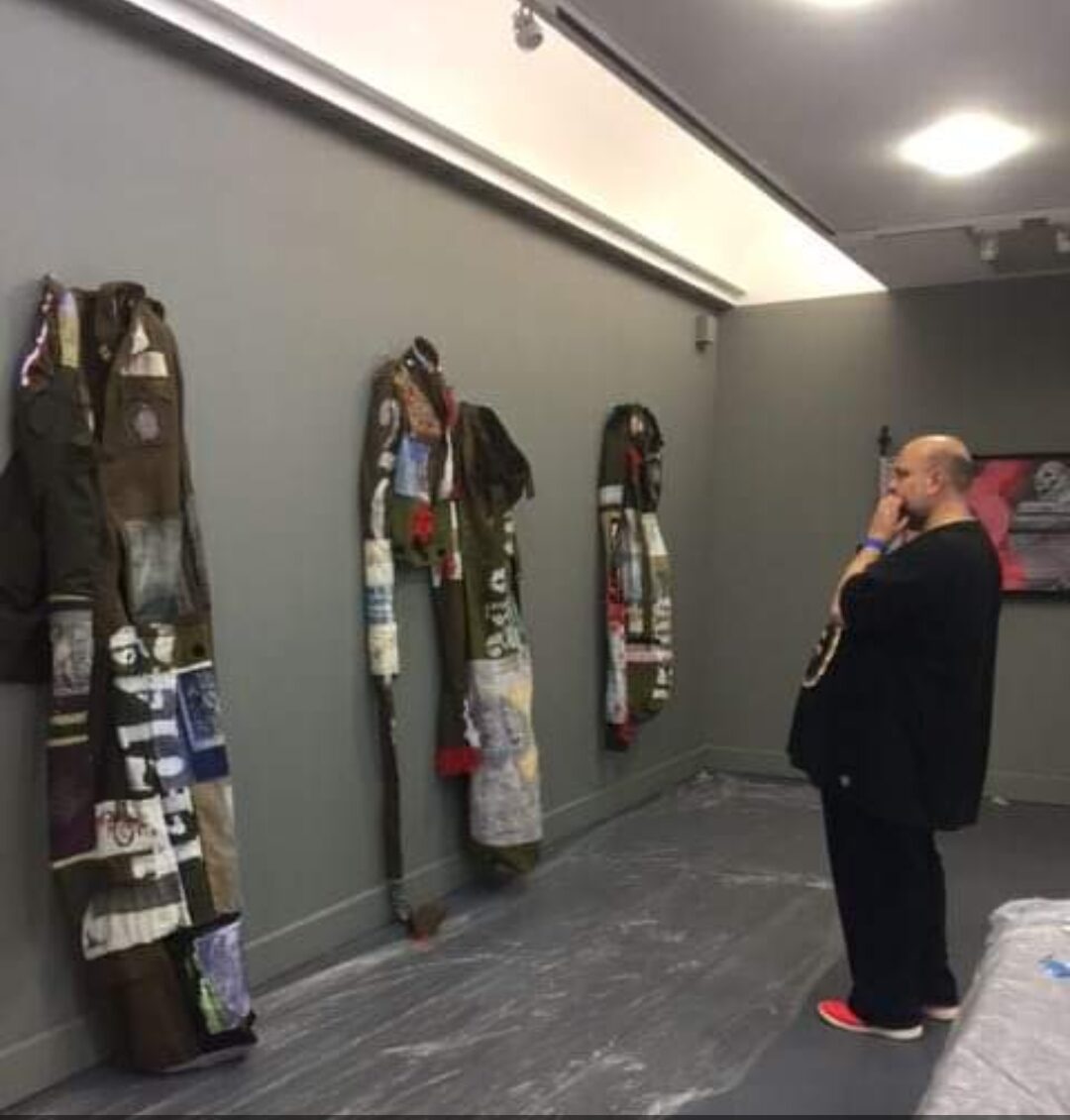
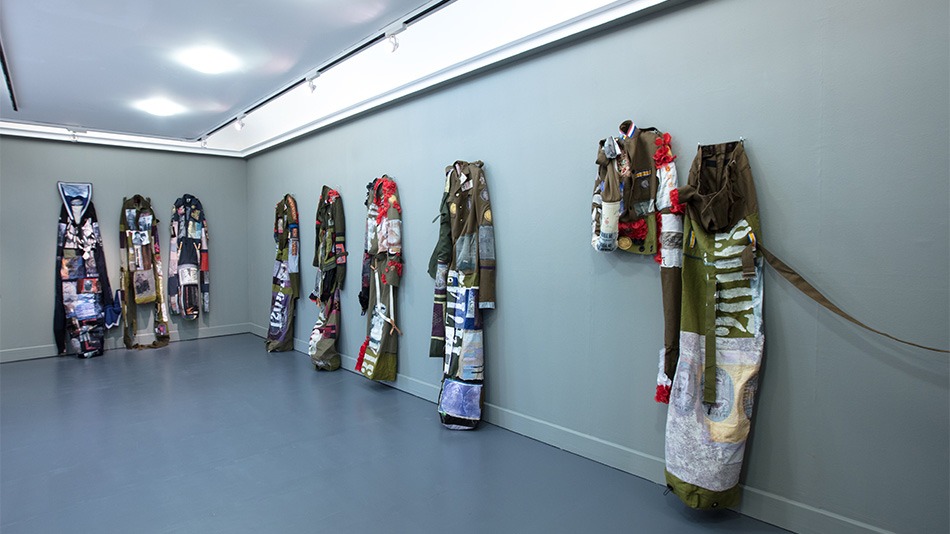
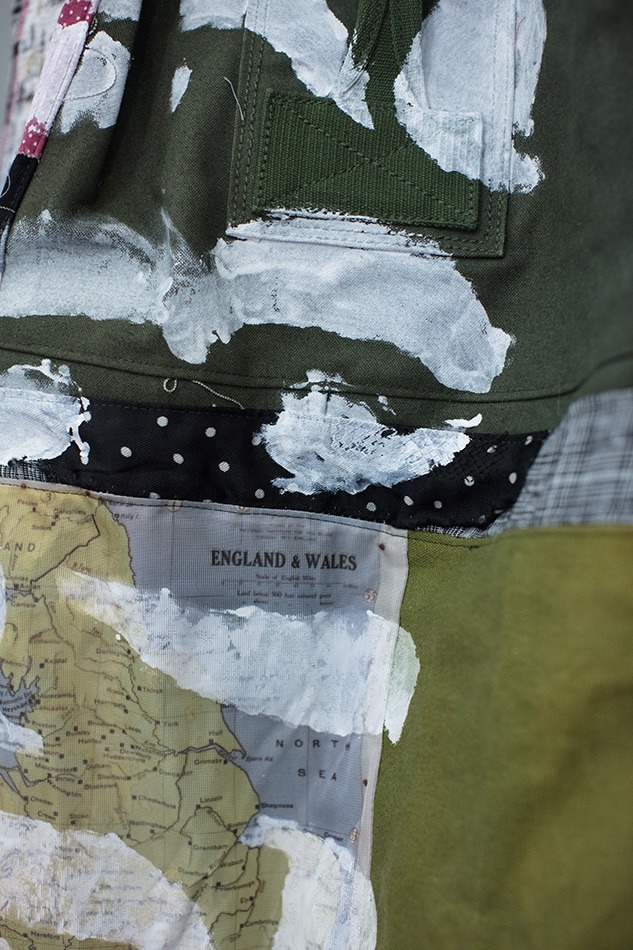
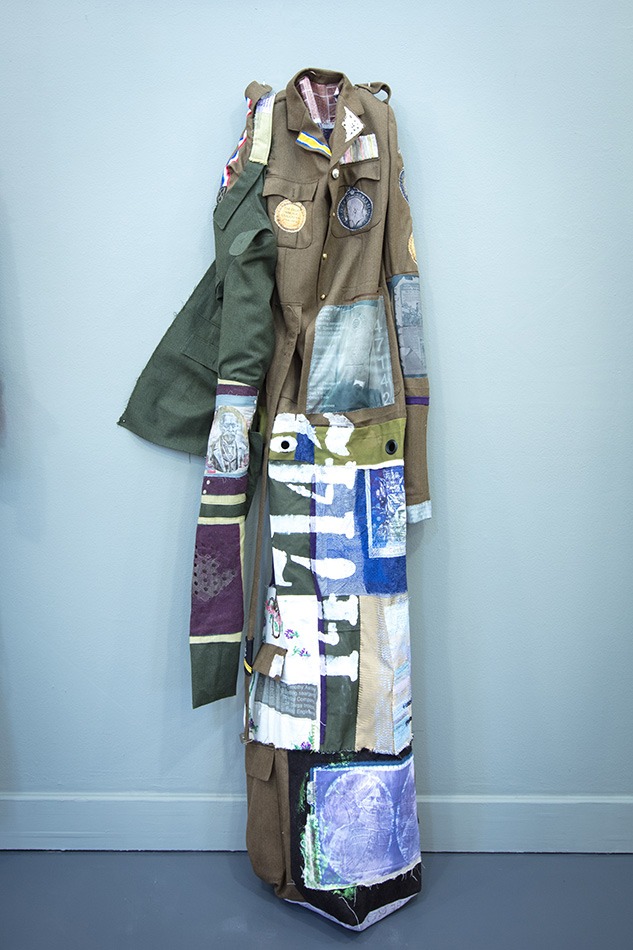
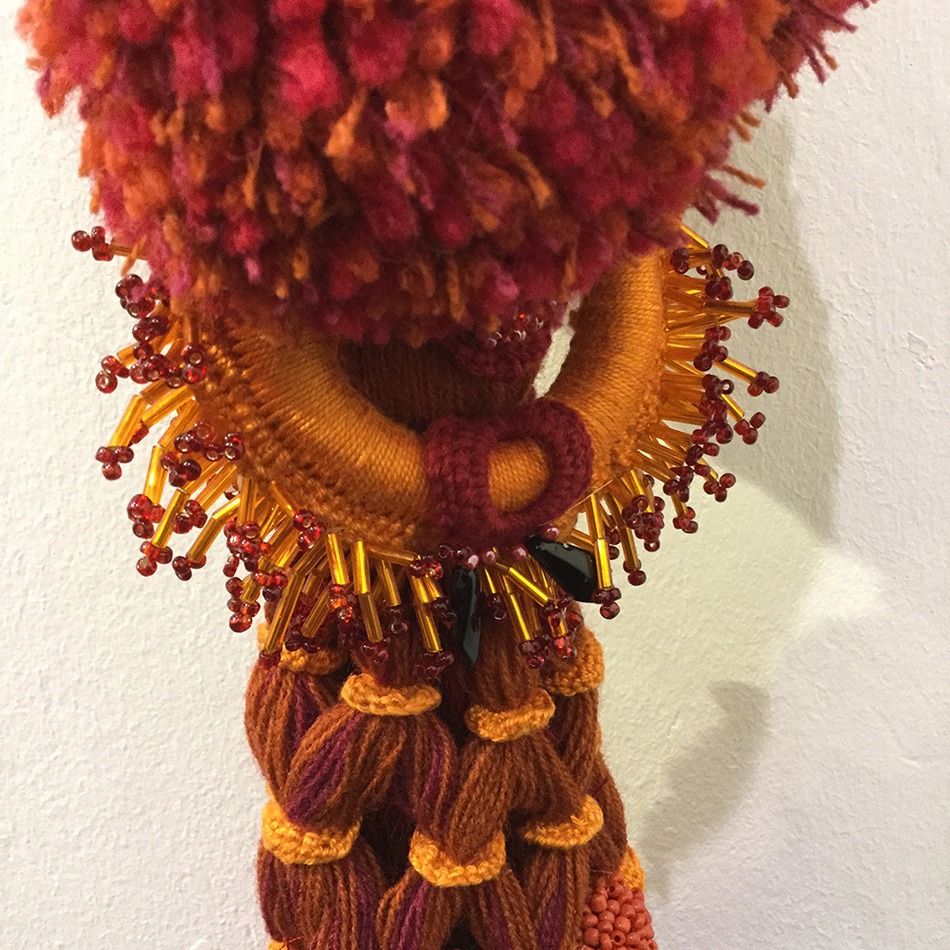
Taking personal starting points of family and local history, I have produced a number of ‘body bag’ forms that graft actual uniforms with army kit bags in the form of ‘sentinels’. United by an enquiry into the nature of ‘decorations’ in both form and function there is an extensive use of vintage, digitally printed pieces of cloth, embroidery and textile processes to alter these existing objects and allude to narratives of individuals.
Uniforms are designed to make everyone of the same rank and regiment equal. A military decoration is an award of medal and ribbon that denotes heroism. To decorate expresses the need to personalise or make more attractive. For those whose loved ones have served in the armed forces I feel there is a fundamental need to imbue these pieces of clothing with more individual and personal memories that go beyond serial numbers or army insignia. As transitional objects we hold clothing to us to experience some sense of the person to whom they belonged. Mythologies are created through repairing, altering and embellishing these. As an embroiderer the methods and tools I have at my disposal lend themselves to the act of repair. The making of the work has been a method to explore many of the questions that I have had about remembrance and sacrifice and of how people put themselves back together after experiencing a traumatic loss. For me this is a domestic and highly personal act that is concerned with creating memories and re-telling stories through colour, texture, materials and imagery. During the centenary of the Great War many people have embarked on researching their ancestors and discovering through these connections. As a nation we have lost the ability to understand the language of military regalia and most of us would struggle to recognise and name a WW1 medal or be able to identify the cap badge for a specific regiment. Many contemporary military historians are preoccupied with banishing the myths and making the tragedy of war more understandable. Moving away from blank, colourless memorials, even going so far as colouring archive footage to allow it to resonate with the viewer.