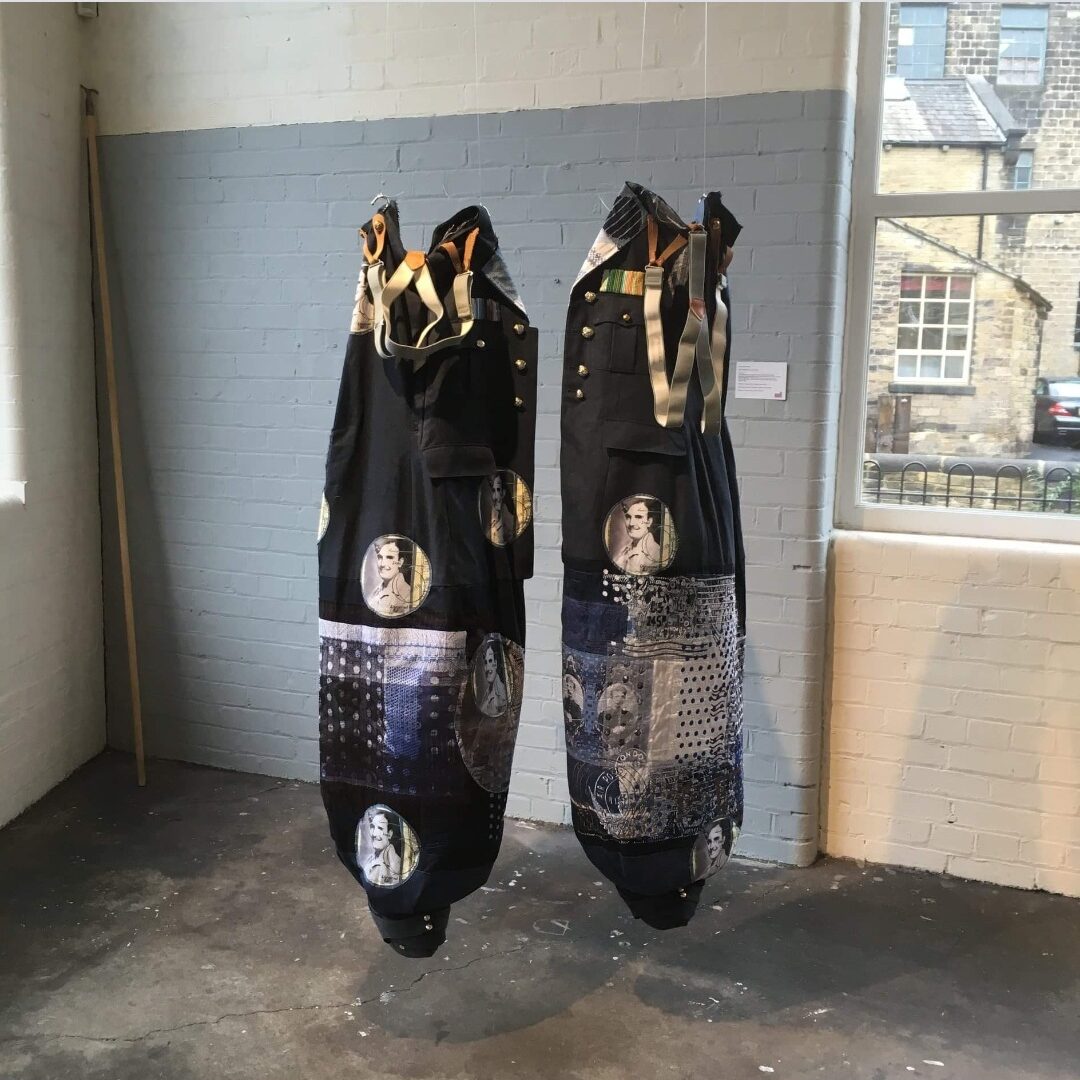
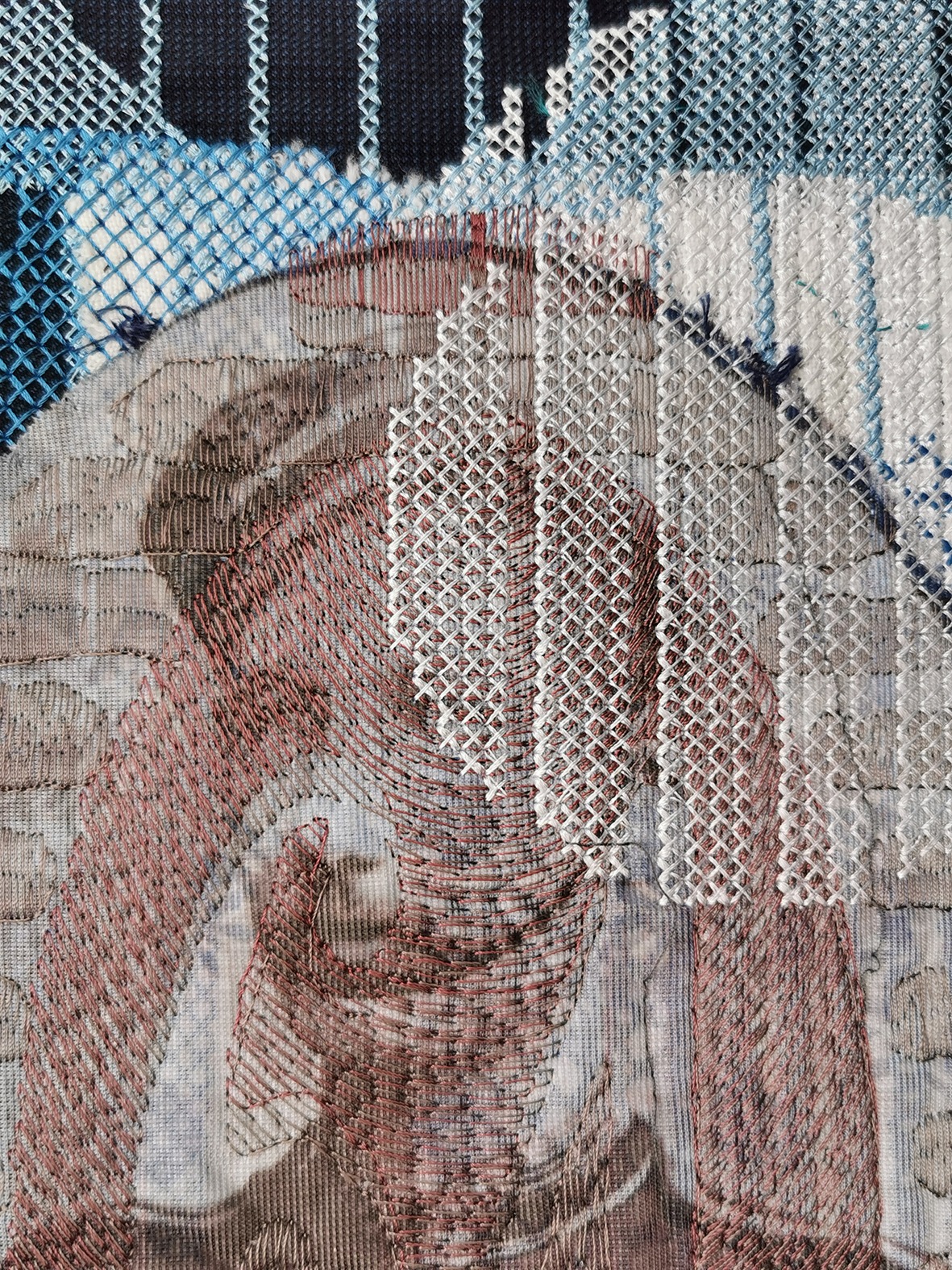
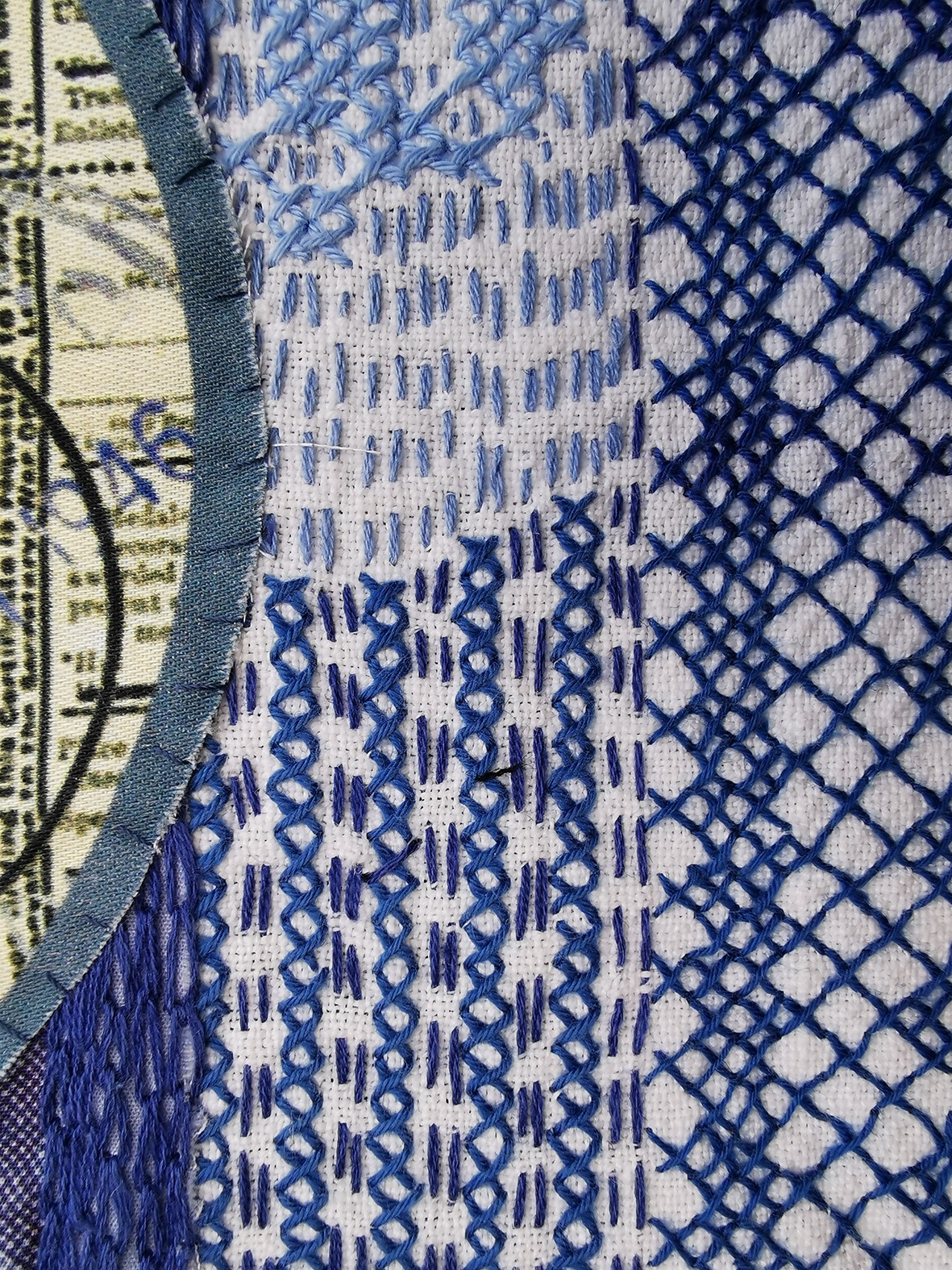
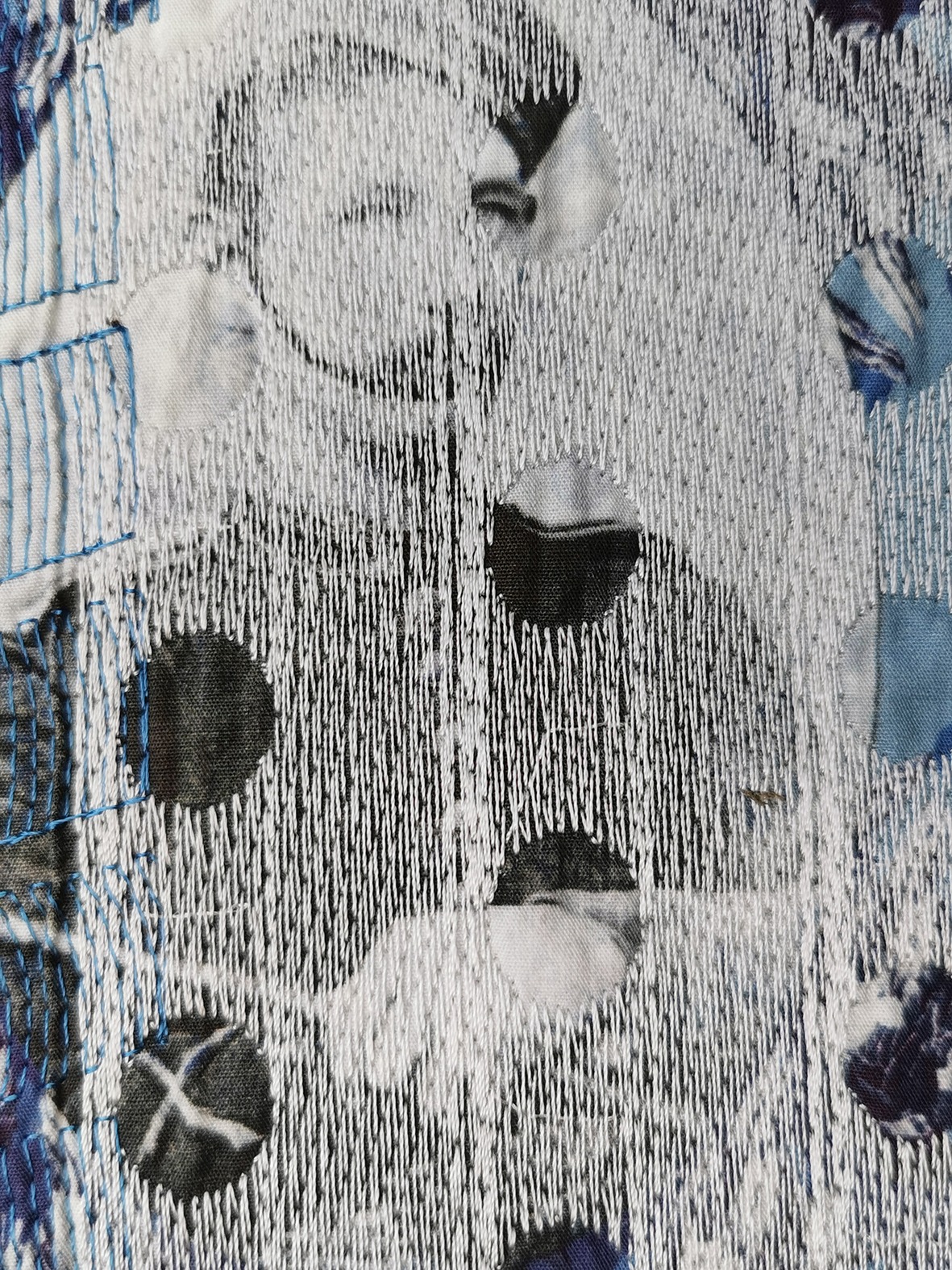
Whortleberry Blue (i) and (ii)
Cloth is infused with layers of narrative. I believe that imagination often constructs or transforms our own memories based on the material evidence handed down to us. Uniforms in particular can act as portals to a multitude of stories, falsehoods and questions. When one handles these as a child it is impossible to ignore the feel of the cloth and not consider the experiences it has witnessed.
Many anecdotes about the military are handed down across generations. My grandfather, William Cheney, who was a driver for the RAF in WW2, spoke of the blueberry or ‘whortleberry’. His tale claimed that pilots consumed copious amounts of jam to improve their night vision and that was why the uniform was dyed with these berries so the stains didn’t show up.
The contraction of myths and fact are fascinating. A Leeds-based company, ‘Hainsworth,’ actually supplied the first RAF uniforms in 1918. When asked to supply a colour that stood out from existing military uniforms, they were able to use a warehouse full of blue-grey material that had been woven for the Tsar of Russia for his Cossack trousers. The distinctive blue-grey dye recipe is top secret, but it does resemble the hues achieved with whortleberries.
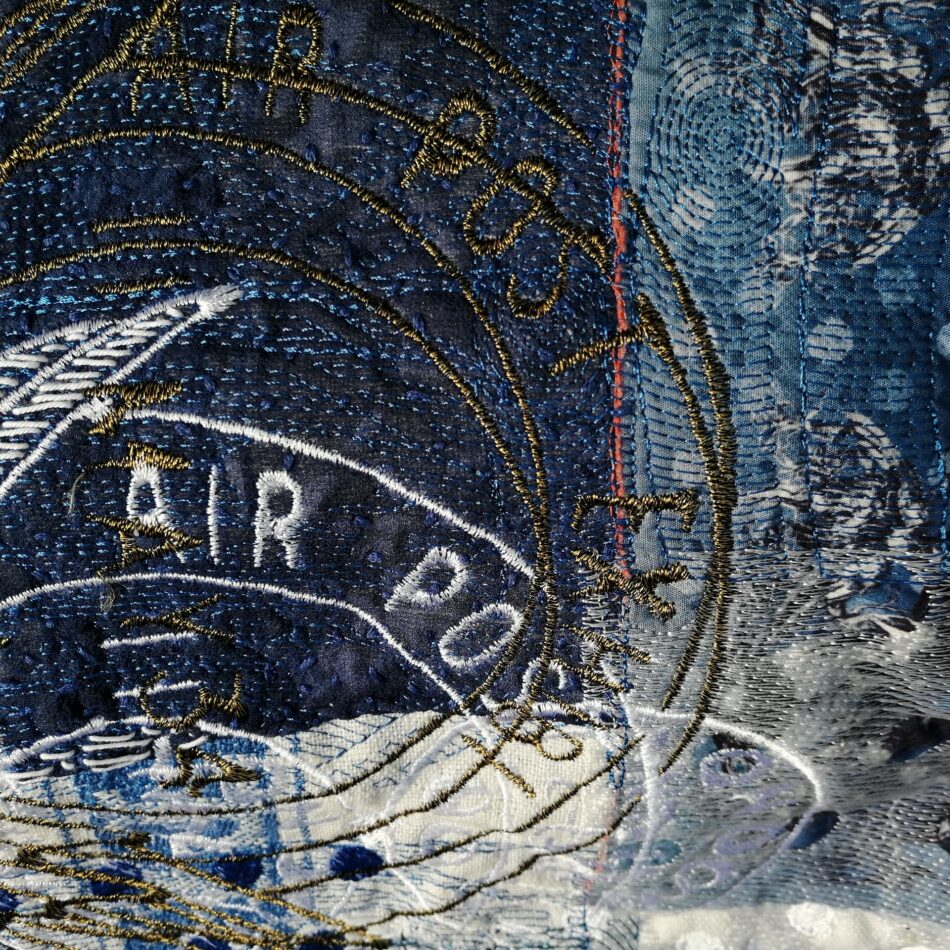
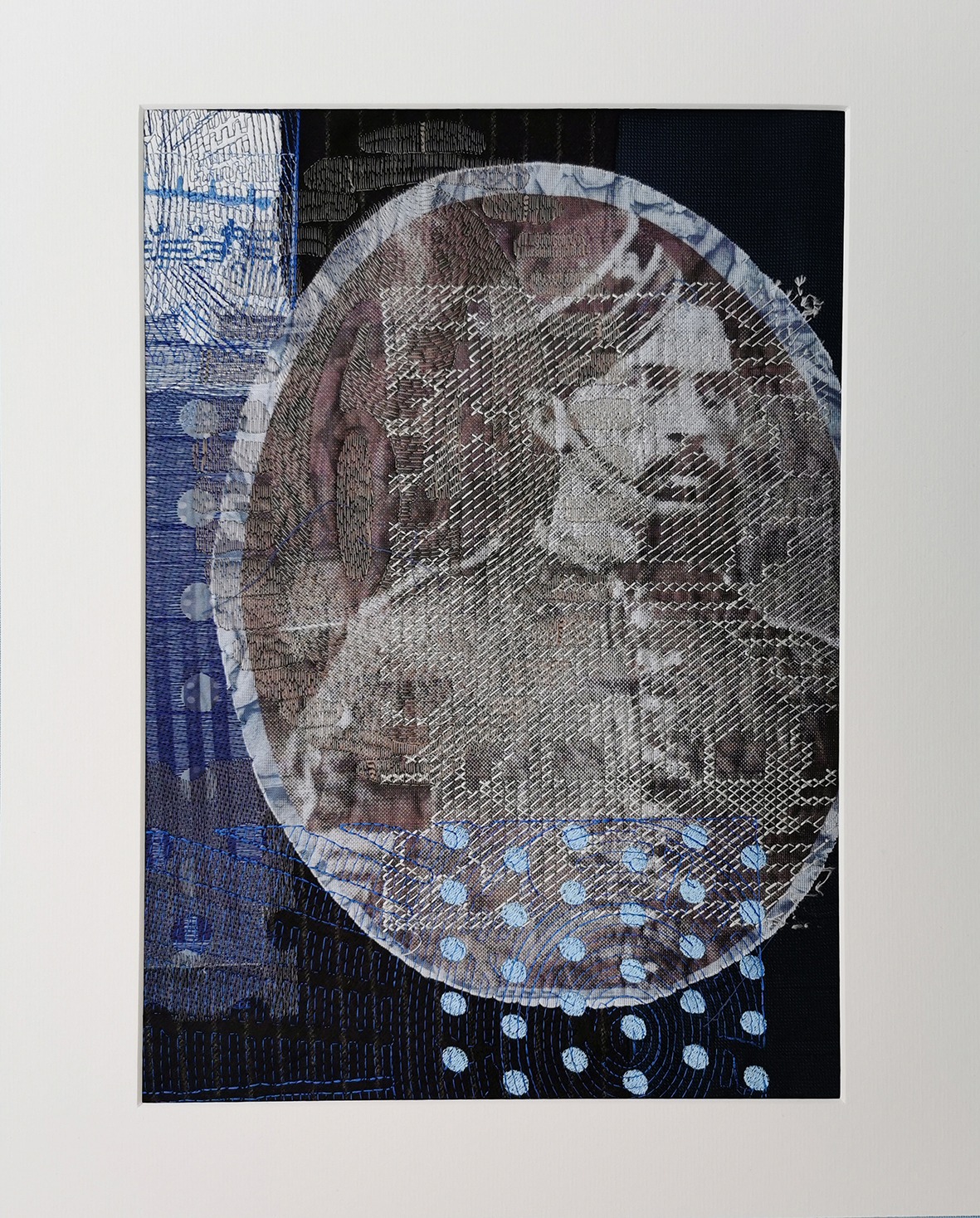
This work concerns the questioning of narrative by utilising existing garment constructions of uniforms; dissecting and recomposing these to form strange objects, richly decorated with hand and digital embroidery. The form is rendered useless. They are no longer wearable. They evolve from useful to useless as they balance the weight of military insignia and pattern.