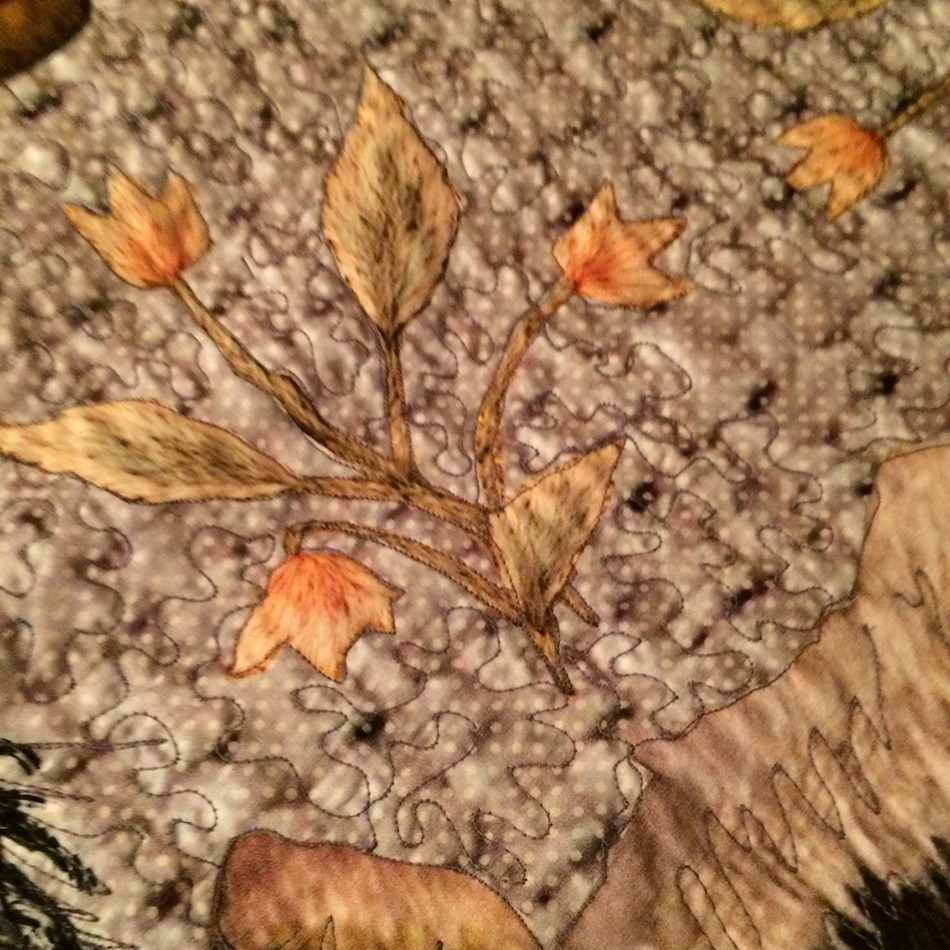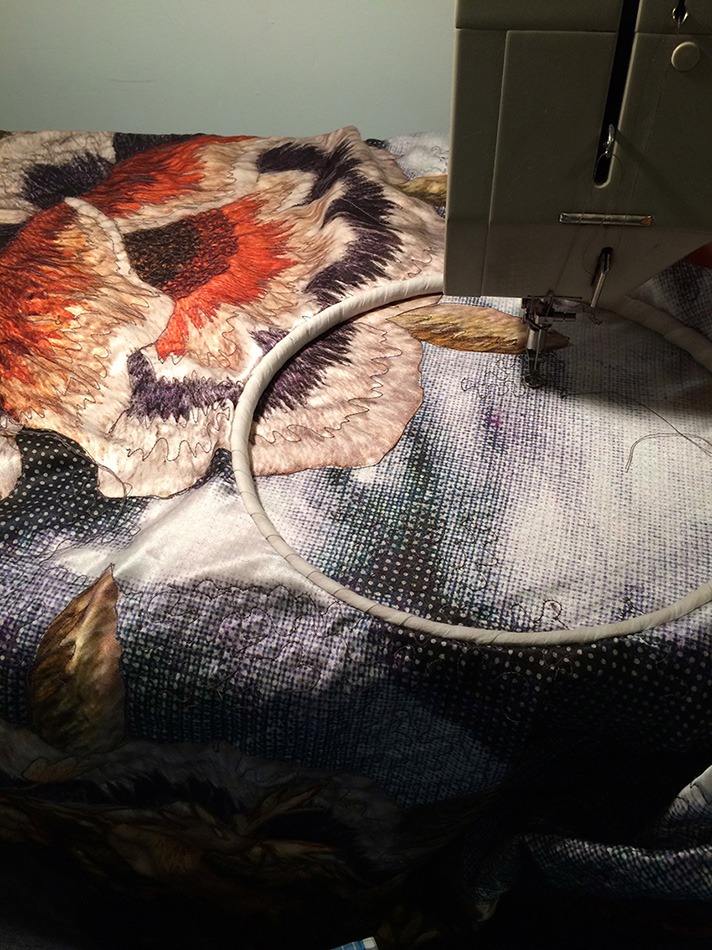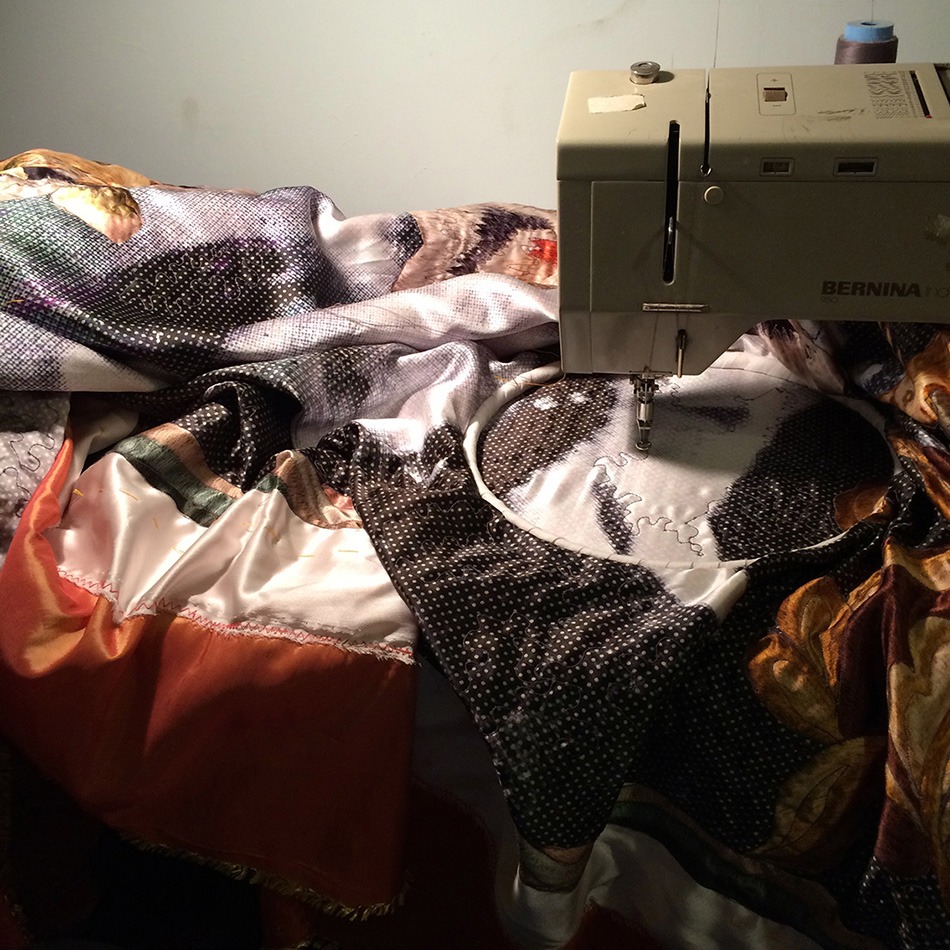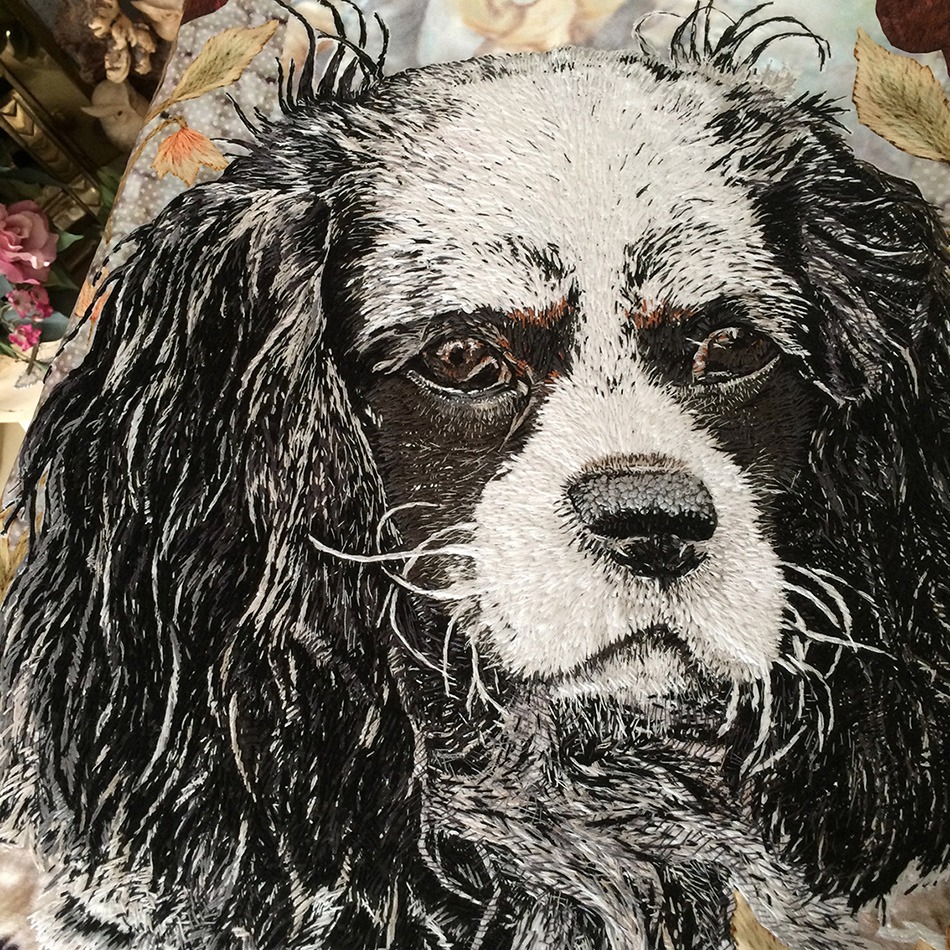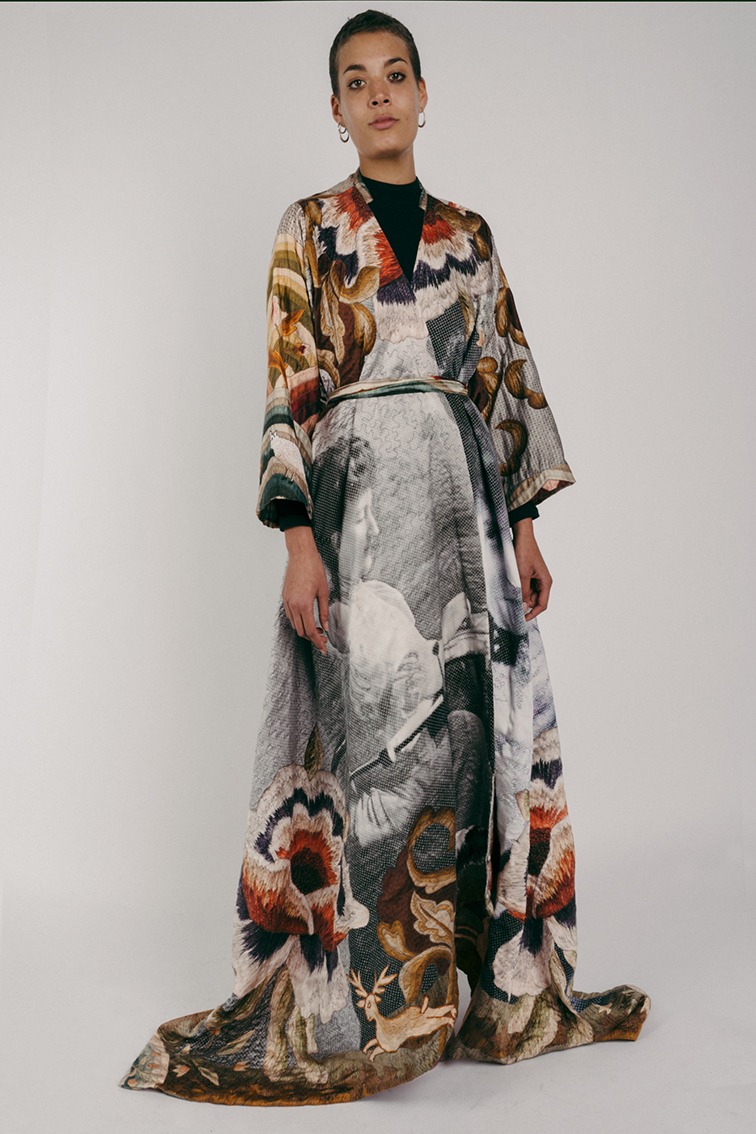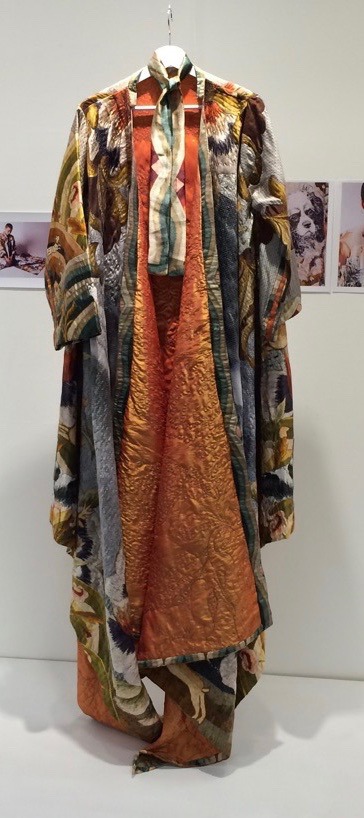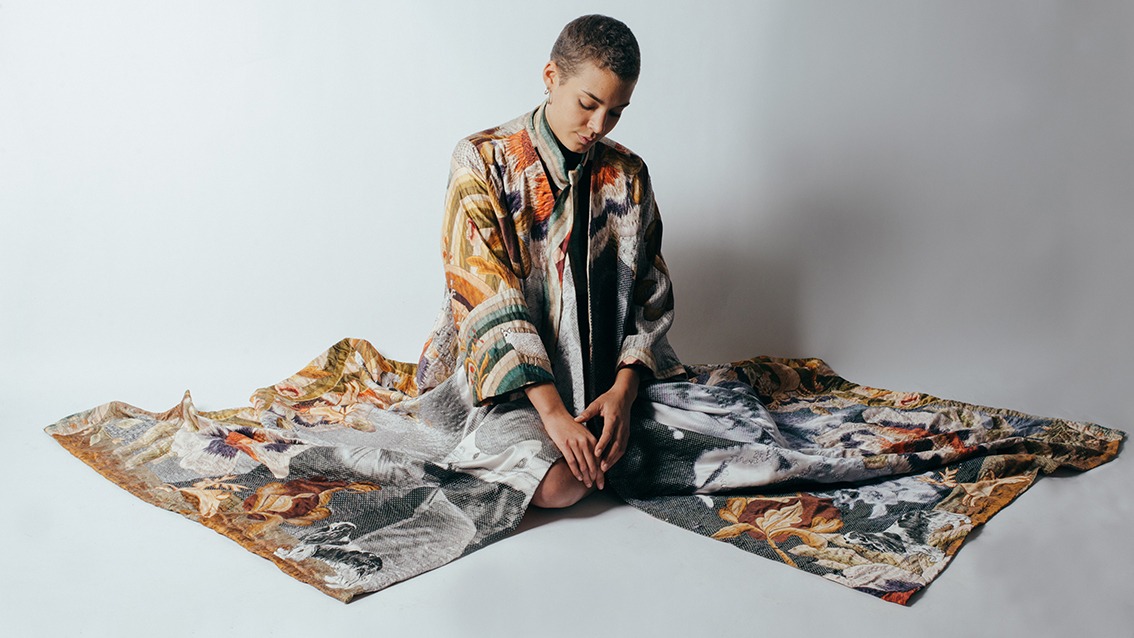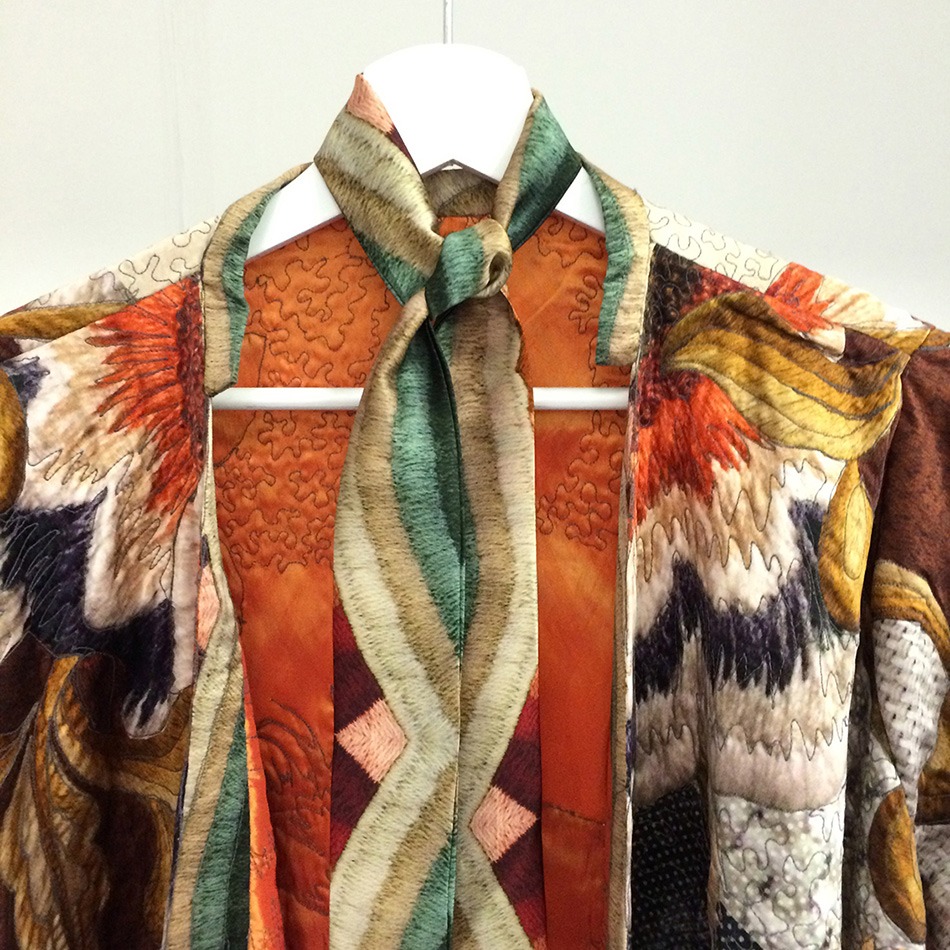
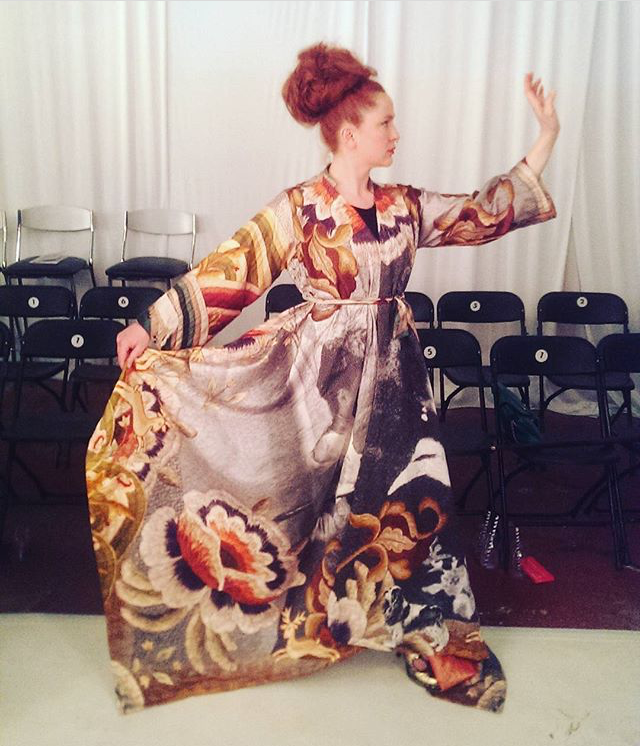
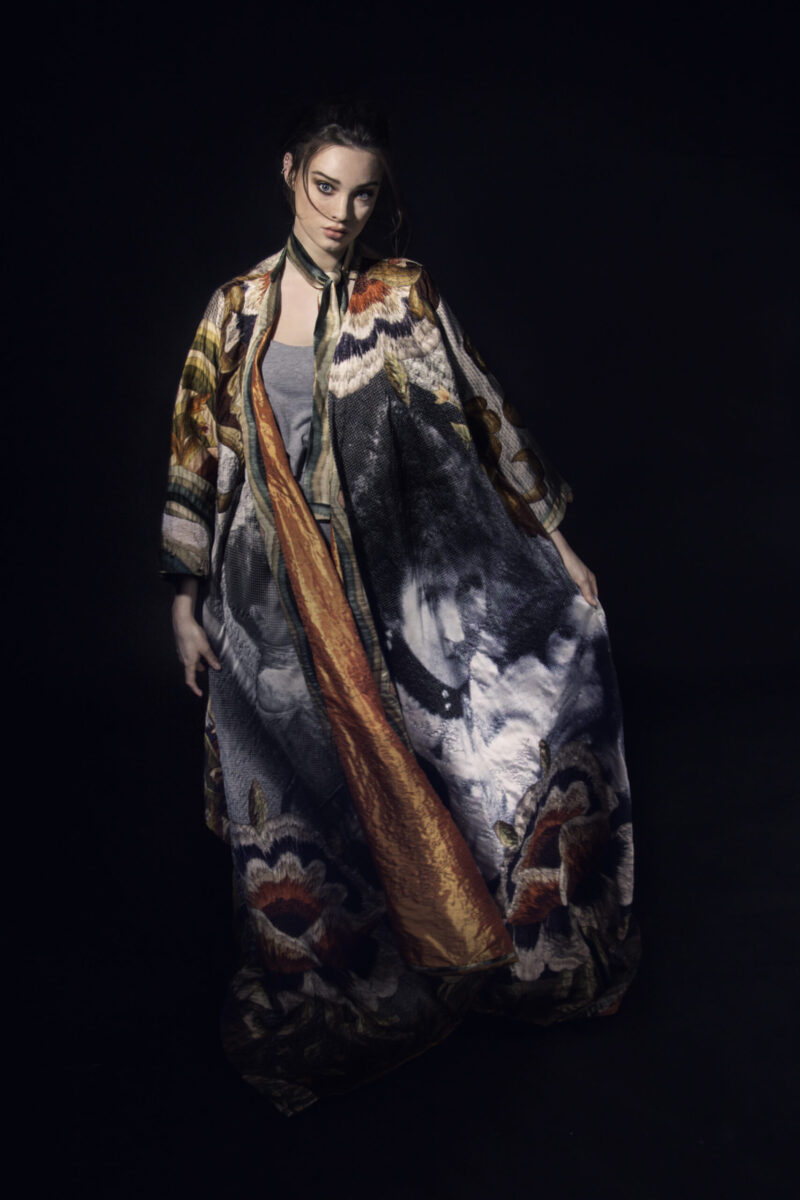
Red Strand had organized a visit to Girton College Cambridge (you can see the reception room with the embroideries on their website) to view the tree of Life panels and to hear a lecture by Lynn Hulse. It wasn’t until I saw the work in the flesh and Lynn brought them to life so eloquently that I was really excited about making this piece of work. It just so happened that I was back in England that day and, as I don’t drive, my tireless relatives were coaxed into the treat of a pub lunch in Cambridge if they gave me a lift! I am so glad I went, as the impact of the embroideries in the room was tremendous. However, it was Lynn’s lecture that brought the two Sisters to life.Like the best episode of Downton Abbey never made, their real story of the Anglo-Irish was fascinating. Filled with intrigue and speculation it gave the embroideries themselves a different perspective. For me, it was an irresistible challenge. I had to make something ridiculously grand; luxurious and overly long. It is impossible to walk in the coat as the front panels trail along the floor. The 80 hours of hand and machine embroidery were a reflection on the discipline and indefatigability of the older Sister who reportedly sewed 5 hours every day. The youI begged Lynn for images of the work as we weren’t permitted to photograph it. She supplied half a dozen, not maybe images I would have chosen but perfectly useful. After all, the challenge was to respond to an archive. I then set about sketching a King Charles spaniel. There is a photo of the younger sister Jane clutching this dog like an overstuffed teddy bear. I was a fan of Lady Julia, not Lady Jane! I had to find an image to immortalise their ‘Poppy’. In my narrative, they cloned this poor dog, always with a fresh one at hand to star in the embroideries or ready to pose for a photograph such as the one I of the younger sister Jane practically choking this lapdog.I didn’t do this project properly. I just didn’t have time. No toil with pinned on motifs, no careful scale tests of the design…things I would insist students did. I just had a sense that this what I needed to do and after all it would be a bit of cloth and I could chop it up if worse came to worst. I found myself with a tape measure and my sister’s anorak estimating where the motifs would need to be placed on the final garment. Working on a small notebook computer I ‘photoshopped’ merrily away, with obscene confidence that it would all come out right. I created the large digital files. Knowing that if the motifs were composed similarly to a medieval cope then they would just look right when worn. It was kind of a virtual ‘decoupage’ sticking images of stitched motifs from the Girton embroideries at different scales within the composition. The honeysuckle would go here and the leaf there. The sleeves had to be asymmetric and the front panels dominated by enormous portraits of the sister. The dog sat firmly on their back, nestled under the miniature of Lady Jane. All on a screen 10 inches big….. A ridiculous way to work but all I had to hand at the time!